
As hospitals enter 2026, they face one of the most complex environments in recent memory: rising costs, workforce pressures, shifting patient expectations, and sweeping federal policy changes. To stay competitive, health systems must align brand, data, and digital access strategies with patients who are more informed and discerning than ever.
This special report highlights seven trends reshaping hospital marketing in 2026 and shares practical strategies to help your health system stand out in a highly competitive landscape.
- Brand Strategy Realigns Around Mission and Purpose
- Data Intelligence Drives Predictive Precision
- AI-Driven Personalization & Hyper-Targeting
- Digital Access Emerges as Brand Differentiator
- Online Reputation Becomes Primary Conversion Driver
- Workforce Marketing Evolves into Core Brand Strategy
- Multilingual and Multimedia Content Powers Patient Engagement
Position your health system for success in 2026. Keep reading to uncover the trends and tactics you’ll need to stay ahead.
The Current Landscape: What’s at Stake for Health Systems
In 2025, health systems faced one of the most volatile financial and operational environments in recent memory, and that turbulence is carrying into 2026. Rising costs, workforce challenges, and shifting consumer behavior are compounded by sweeping changes in federal healthcare policy, creating a high-stakes environment where marketing strategies must be both nimble and data-driven.
Here are some of the most significant forces that shaped the hospital marketing landscape in the past year:
- Political shifts are straining financial models: President Trump’s “One Big Beautiful Bill,” passed in July 2025, introduced sweeping reforms, including an estimated $1 trillion reduction in Medicaid funding over the next decade and new work requirements for nondisabled Medicaid recipients ages 19–64. Hospitals—particularly rural and safety-net health systems—are bracing for a surge in uncompensated care as coverage declines, forcing leaders to reallocate resources and rethink outreach strategies.
- Reproductive health restrictions are impacting access and marketing: A one-year suspension of federal funding for Planned Parenthood and other reproductive health facilities offering reproductive services has left many communities with fewer care options. Health systems in these markets must expand patient education and access initiatives to address service gaps and ensure continuity of care.
- Public trust in healthcare is declining: Just 40% of US adults reported a high level of trust in doctors and hospitals in 2024, down from more than 70% in 20201. One in four adults also avoids routine appointments because they don’t trust their doctors.1
- Labor costs are soaring. Staffing shortages persist, and labor now accounts for more than half of total hospital operating expenses. Restrictive immigration policies are shrinking the healthcare talent pool at a time when demand for skilled clinicians has never been higher.
- Inflation and tariffs are driving up costs: Prices for medical supplies, pharmaceuticals, liability insurance, utilities, and IT infrastructure continue to rise. New tariffs on imported medical devices—69% of which are manufactured overseas—have pushed many hospitals to delay essential upgrades. As a result, 82% of healthcare leaders expect hospital expenses to rise at least 15% in the next six months, and 94% are postponing equipment investments.
- Compliance burdens are increasing: Regulatory changes, including updates to the HIPAA Security Rule, are projected to cost the sector $9 billion in their first year of enforcement.
- Patients are harder to win and retain: With 76% of people saying a positive online reputation influences their choice of doctor, health systems face rising competition for loyalty.2 Today’s patients expect transparent, convenient experiences at every step of their care journey.
As we move into 2026, health systems are realigning priorities to keep pace with rising digital expectations and more informed and discerning patients. This report highlights the top seven healthcare marketing trends shaping the year ahead and offers actionable strategies to help your organization stay ahead of the curve.
2026 Healthcare Marketing Trends to Watch
Position your health system for success in 2026 by leveraging these top healthcare marketing trends.
1. Brand Strategy Realigns Around Mission and Purpose
Branding is no longer just about creativity. It’s about proving value through every interaction. Patients and physicians alike gravitate toward health systems that embody a clear mission and purpose: consumers are more likely to choose brands they trust, and physicians are more likely to affiliate with organizations that reflect their values. In 2026, leading hospitals are elevating brand strategy beyond logos and taglines, using operational proof and authentic storytelling to strengthen loyalty.
Making Mission-Driven Branding a Reality
Bringing mission-driven branding to life requires intentional effort at every level of your organization. Here are practical ways to put your values front and center:
- Tell the story behind the care: Highlight examples of community investment, team dedication, and expanded access in areas like primary care, maternal health, or behavioral health. These narratives build emotional resonance and reinforce your system’s role as a credible community partner.
- Run brand onboarding for staff: Introduce your mission early and give every clinician and staff member language to reinforce your values during patient interactions.
- Align messaging with operational truth: If you offer same-day appointments, extended hours, financial counseling, or other tangible benefits, integrate these proof points into your brand voice.
- Use real language, not jargon: Swap vague claims like “exceptional care” for specific metrics: wait times, follow-up protocols, physician portal access, or patient satisfaction scores.
- Promote proof points: Spotlight Healthgrades Quality Awards, star ratings, and physician accolades across websites, profiles, and print collateral to support messaging with proven outcomes. A recent Healthgrades survey found that 76% of site visitors would only choose a hospital with high quality ratings, and 63% are more likely to choose a hospital with a quality award when comparing two options for a procedure.3
- Audit every touchpoint: Ensure your brand’s voice and values are consistent across appointment confirmations, signage, call center scripts, and physician bios. Patients will notice the details.
Using Community Engagement as a Brand Amplifier
Hospitals are also moving beyond digital channels to demonstrate their values in action. Here’s how your organization can do the same:
- Local voices and events: Feature clinicians, nurse practitioners, and community health workers already known in the area.
- Meaningful outreach: Sponsor local 5Ks, back-to-school screenings, CPR training days, or similar community-based initiatives.
- Patient empowerment campaigns: Tie brand messaging to awareness days and observances—such as Health Empowerment Day—to encourage health ownership, highlight preventive care, and strengthen local relevance.
- Seasonal campaigns: Aligning messaging with awareness months or timely milestones boosts engagement. For instance:
- February: “Stay Heart Healthy” messaging during American Heart Month to encourage cardiac screenings.
- August: “Back-to-School Wellness” campaigns for physicals, immunizations, and behavioral health support.
- October through early December: Open enrollment reminders for older adults, emphasizing annual wellness visits and Medicare benefits.
- Culturally relevant media: Use out-of-home tactics like school signage, small business posters, and local radio to connect authentically with your local communities.
Mission-driven branding isn’t a tagline; it’s proof. Health systems that show their values through consistent messaging, measurable quality, and visible community engagement will stand out in a competitive 2026 landscape.
2. Data Intelligence Drives Predictive Precision
With budgets tightening and media spend under scrutiny, health systems are moving beyond broad campaigns to highly targeted, performance-driven marketing strategies. Predictive analytics, behavioral modeling, and claims-based targeting are helping marketers stretch every dollar and deliver smarter campaigns across the entire patient journey.
Campaigns Are More Focused Than Ever
Health systems are narrowing their marketing efforts to high-intent patients, using data-driven signals to engage consumers at the right moment in their care journey. That focus comes to life through specific behaviors that indicate when patients are ready to take the next step.
- Tracking key consumer signals: Patients reveal intent through search behavior (comparing specialists, reading condition-specific articles) and appointment actions (scheduling online, verifying insurance coverage, researching local options).
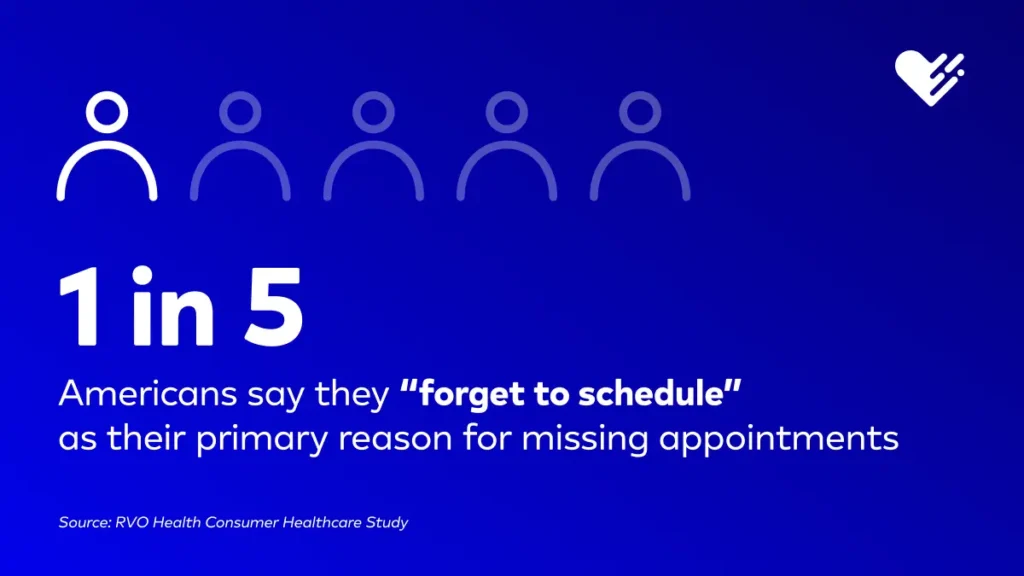
- Closing care gaps proactively: Hospitals already use CRMs and EHRs to address common care gaps, such as reminding patients about annual mammograms or follow-ups. In fact, nearly 1 in 5 Americans say they “forget to schedule” as their primary reason for missing appointments—highlighting the importance of timely reminders.4 Predictive modeling goes a step further by identifying patients likely to need future treatments, such as orthopedic surgery, enabling health systems to engage earlier and guide them to appropriate care.
To execute this level of precision, health systems need platforms that meet patients exactly where they are in their decision making process. One proven option is Healthgrades’ Advertising Solutions, which places your health system in front of patients actively searching for care. With premium placement, branded physician profiles, and clear calls to action, your brand rises to the top of healthgrades.com search results and doctor profile pages—ensuring your campaigns convert interest into appointments.
Privacy and Targeting Context
With privacy regulations evolving, marketers are shifting strategies to rely more heavily on first-party data and HIPAA-compliant targeting methods. In mid-2024, Google reversed its plan to fully phase out third-party cookies, instead adopting a hybrid model that gives users more control over cookie preferences while keeping third-party cookies in play.
For healthcare marketers, this means:
- Privacy-first targeting remains essential: Even with cookies still available, relying solely on them is risky as consumer controls tighten.
- First-party data is more valuable than ever: Building robust consent-based data strategies ensures future-proof targeting.
- HIPAA-compliant solutions are nonnegotiable: Marketing teams must balance personalization with regulatory requirements.
To support these efforts, Healthgrades’ Brand Solutions leverage proprietary data from Healthgrades Audience Intelligence, which combines billions of online consumer interactions with HIPAA-compliant, de-identified claims data, and machine learning to hone in on the consumers most likely to make an appointment soon. Reach a highly qualified audience on Healthgrades and wherever they are across CTV, web, video, or audio. By using this foresight with condition-specific targeting, you can proactively engage with high-intent individuals early and guide them to your health system.
Smarter Budget Decisions With Real-Time Insights
Marketing leaders are embracing performance dashboards and advanced analytics to make more confident budget decisions. By shifting from retrospective reporting to real-time insights, health systems can act faster, allocate resources more strategically, and demonstrate measurable ROI.
- Track KPIs that matter: Focus on metrics like conversion rates, organic traffic, and bounce rates to evaluate campaign performance and pivot quickly.
- Forecast seasonal surges: Use volume forecasting models to anticipate peaks in service line demand (e.g., flu, orthopedics, maternity) and adjust messaging, staffing, and appointment availability proactively.
- Align marketing with operational capacity: Capacity-aware modeling helps avoid over-promoting specialties or locations with limited availability, ensuring campaigns drive patient acquisition without overwhelming staff.
More than basic reporting, data is a predictive engine that helps marketers focus budgets where they’ll have the greatest impact, guide patients to the right services, and stay compliant.
3. AI-Driven Personalization & Hyper-Targeting
The next evolution of data intelligence is here: AI-powered automation and hyper-personalization. Marketers are moving past basic demographic targeting and claims-based insights to deliver individualized patient experiences at scale.
From Broad Messaging to Individual Precision
AI is reshaping how health systems engage patients, turning “one-size-fits-all” outreach into tailored, relevant communication, such as:
- Dynamic website content that adjusts to browsing patterns, showing condition-specific services or physicians based on user behavior.
- Personalized email campaigns that recommend physicians, screenings, or specialty care aligned with a patient’s digital activity.
- AI-powered chatbots that offer tailored responses, triage care needs, and create seamless scheduling experiences.
For instance, instead of a generic “you may need a cardiologist” message, AI enables precision like: “Based on your recent activity, here’s the cardiologist nearest to you, with appointment availability this week.”
Hyperlocal Campaigns That Reflect Community Needs
AI also powers granular targeting, meaning health systems can discover not just who patients are but also where they are. These hyperlocal, AI-powered tactics include:
- High-opportunity ZIP code targeting to close gaps in awareness or volume for underutilized clinics.
- Localized service-line promotion where campaigns mirror regional specialties, such as women’s health or cardiology, by using custom language, imagery, and appointment pathways.
This focus ensures marketing investments resonate with community values, demographics, and care priorities—building trust while driving measurable results.
Workforce Impact: AI as a Strategic Ally
AI is not a replacement for clinical expertise. Instead, it’s an operational ally that lightens workloads, improves response times, and helps mitigate staffing shortages without impacting quality of care. Consider these other key benefits:
- Automating scheduling workflows and FAQs outside office hours.
- Routing inquiries efficiently, so staff can focus on higher-value interactions.
- Triaging patient requests in real time, reducing bottlenecks.
To help health systems put these benefits into practice, Healthgrades’ Medchat·ai for Health Systems and Practices provides a HIPAA- and SOC 2 Type 2-compliant platform to handle high inquiry volumes, automate repetitive tasks, and deliver personalized, on-demand patient engagement. The result is an operational advantage that shows AI isn’t just a campaign tool. It’s also a driver of better access and care continuity.
AI-powered personalization is now a competitive must-have, helping health systems deliver hyper-targeted campaigns, streamline workflows, and create smooth patient experiences that deepen connection and loyalty.
4. Digital Access Emerges as Brand Differentiator
Patients increasingly expect 24/7 access to healthcare information, scheduling, and communication, and they’re more likely to choose organizations that make those interactions seamless. Health systems that invest in robust digital access—and market those capabilities effectively—can turn convenience into a powerful differentiator.
Make Scheduling Frictionless
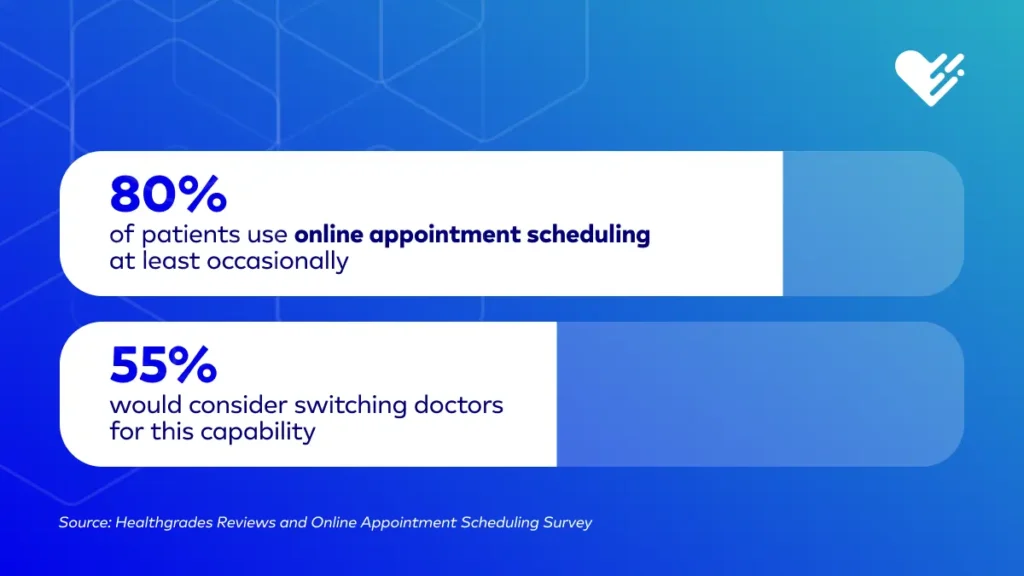
Patients are looking for real-time availability, easy booking, and instant confirmation. According to a 2025 Healthgrades study, 80% of patients use online appointment scheduling at least occasionally, and 55% would consider switching doctors for this capability.2
To deliver on this demand, organizations should focus on strategies that improve access and reduce scheduling barriers:
- Upgrade appointment request forms to full online scheduling tools: Transform appointment request forms into full online scheduling tools that seamlessly integrate with your health system’s EMR. By showing live availability, filling last-minute openings, and sending automated reminders, you make scheduling easier for patients while reducing no-shows.
- Combat costly no-shows: Missed appointments cost practices an estimated $150 billion annually, underscoring the need for smarter scheduling workflows.
- Leverage Healthgrades’ Advertising Solutions with Online Appointment Scheduling (OAS): With this add-on, patients can book directly from your physicians’ Healthgrades profiles, with integrations that sync to your EMR for real-time scheduling, cancellations, and rescheduling.
Own and Optimize Your Digital Front Door
A patient’s first impression of your organization often happens online—long before they walk through your doors. Physician and hospital profiles act as your brand’s “digital front door,” yet many remain incomplete, outdated, or unclaimed, creating obstacles for patients trying to make informed decisions.
To ensure your brand makes a strong first impression:
- Claim and customize every profile: Most doctors already likely have free profiles on one or more directories, but without active management, those listings can be incomplete, inaccurate, or inconsistent. By claiming and customizing profiles, organizations ensure accurate details, strengthen brand consistency, and shape a stronger first impression for patients.
- Enhance discoverability: Rich, well-structured profiles featuring professional photos, physician bios, accepted insurance plans, specialties, and verified patient reviews strengthen credibility and improve search rankings. Consistently updated pages with relevant content and patient engagement are more likely to appear in search results—making it easier for patients to find and choose your practice.
- Highlight awards and expertise: Showcase Healthgrades Quality Awards, star ratings, and physician accolades to add credibility and help patients confidently choose your health system.
- Leverage Healthgrades tools: Ensure your doctors claim and manage their online profiles to maintain control of their professional image, and leverage our Advertising Solutions to amplify your brand’s visibility across Healthgrades and our network, including Healthline, Sharecare, and Medical News Today.
Expand Virtual Care Access
Virtual care has moved beyond a pandemic-era necessity to become a core expectation, especially among younger generations who value flexibility and digital-first experiences. However, older patients are also starting to embrace these options, making virtual care a critical differentiator for health systems looking to serve a wide range of demographics.
So, what does this shift look like in practice?
- Telehealth adoption is mainstream: Patients increasingly view telehealth as a convenient alternative for follow-ups, routine visits, and managing chronic conditions. Offering video visits and secure messaging options ensures continuity of care, reduces in-person wait times, and keeps patients engaged between appointments.
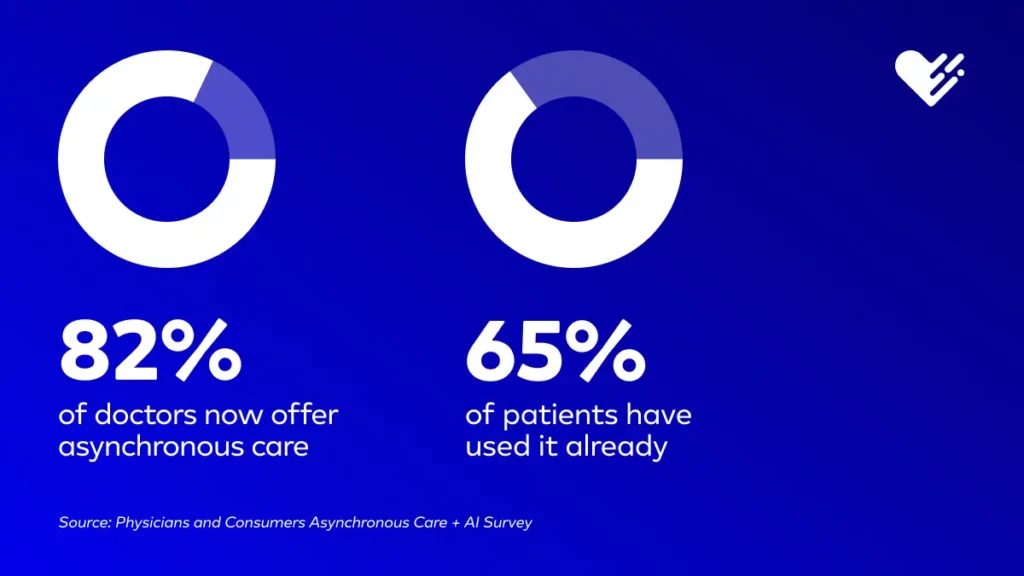
- Asynchronous care is on the rise: A Healthgrades study found that 82% of doctors now offer asynchronous care, and 65% of patients have used it.5 While Gen Z leads adoption at 81%, Gen X and Millennials are also turning to async care for scheduling flexibility, convenience, and affordability.
- Patient preference is shifting: Digital tools like online portals, secure messaging, and prescription refill features have become essential touchpoints that influence where patients seek care.
Patients view digital access as part of care quality. Health systems need to prioritize real-time scheduling, profile management, and virtual care options to truly stand out.
5. Online Reputation Becomes Primary Conversion Driver
Online search is often the first step in the patient journey, and reviews now play a decisive role in where patients choose to seek care. According to a recent Healthgrades study, 92% of patients use online reviews at least occasionally when researching a new doctor or healthcare professional.6
Build Trust With Reviews and Social Proof
To stand out in a crowded marketplace, health systems must make reputation management a strategic priority. Patients view reviews as a proxy for quality, and a well-managed reputation can directly influence appointment volume, brand perception, and long-term loyalty.
To turn patient feedback into a true competitive advantage, try the following:
- Automate review requests: Send email or SMS reminders after appointments to encourage honest feedback on reputable platforms like Healthgrades, where reviews influence millions of patients’ decisions. Healthgrades’ built-in engagement tools make it easy for consumers to post reviews directly to physician profiles.
- Monitor and respond promptly: Acknowledge both positive and negative feedback in a timely, HIPAA-compliant manner. Professional, empathetic responses show patients that your team values their experience.
- Leverage five-star feedback: Feature top reviews prominently on your website, profiles, and marketing materials to create social proof and reinforce trust.
- Analyze review trends: Regularly review feedback by location or specialty to identify systemic issues, enhance operations, and demonstrate responsiveness.
Highlight Differentiators Patients Value
As patients spend more time researching their options, your reputation strategy must clearly communicate what sets your physicians and health system apart.
- Affiliations and recognition: Showcase awards, hospital affiliations, and ties to research institutions to boost credibility and reassure patients about quality.
- Service line marketing integration: Patients seeking specialized treatments want to see comprehensive insights, proven outcomes, and educational content. Service line marketing that showcases expertise in areas like cardiology, orthopedics, or oncology can make your health system the obvious choice for high-acuity care.
- Experience depth and procedural volume: Patients often weigh frequency of treatment heavily. For example, two orthopedic surgeons may be equally well-rated, but one may perform more knee replacements while the other focuses on wrist procedures. Healthgrades physician profiles make these comparisons easy, helping patients choose doctors based on relevant experience.
Research backs this up. A Healthgrades Consumer Confidence Study revealed that 57% of patients are more concerned with care quality now than before the pandemic, and over one-third spend more time researching hospitals before selecting where to have a procedure.7 Transparent, high quality profiles and reviews help you meet these rising expectations.
Patients are making decisions based on what they read online. Proactively managing reviews, highlighting expertise, and leveraging Healthgrades tools to amplify credibility can turn your online presence into a powerful patient conversion engine.
6. Workforce Marketing Evolves into Core Brand Strategy
As competition for physician loyalty intensifies, health systems are elevating workforce marketing into a core part of their brand strategy. Rather than focusing only on consumer-facing storytelling, workforce marketing is increasingly about building strong relationships with healthcare professionals themselves, reinforcing your value as a trusted partner and employer of choice for physicians.
Strengthening Physician Networks
Healthcare systems face a dual challenge: growing competition for physician loyalty and a projected shortage of 100,000 critical healthcare workers by 2028. To stay ahead, organizations must invest in strategies that attract top talent and deepen physician engagement.
Healthgrades’ HCP Marketing provides targeted, direct-to-physician advertising and communications solutions, empowering health systems to strengthen physician networks and reduce leakage. With access to over 90% of active healthcare professionals, HCP Marketing delivers targeted campaigns that elevate brand reputation, boost referrals, and promote your organization to doctors as an employer of choice—making it a powerful growth driver and loyalty strategy.
Health systems should use workforce marketing as a core brand differentiator to attract and retain talent, increase referrals, and build stronger physician networks that drive growth and inspire confidence.
7. Multilingual and Multimedia Content Powers Patient Engagement
Patients want healthcare information that’s accessible, relatable, and easy to understand—and health systems are responding by investing in video, audio, and multilingual content to break down barriers to care. From short-form videos to translated reminders, the right formats can significantly improve comprehension, confidence, and follow-through on care plans.
Why Multimedia Content Matters
Videos and podcasts are now among the most effective tools for educating and connecting emotionally with patients:
- In 2024, 89% of consumers said they want to see more videos from brands, and 91% have watched an explainer video to learn more about a product or service. Nearly half (44%) prefer video over other formats for learning about new services.
- Short-form videos featuring testimonials, step-by-step explanations of procedures, or common condition overviews make health information more digestible and enhance understanding.
- Live Q&A sessions, webinars, and podcasts hosted by physicians or specialists on seasonal health topics, trending news, or new research increase engagement and position doctors as accessible, valued experts.
- Partnering with patient influencers who share real stories about their care journeys amplifies content reach and adds authenticity.
Some examples of leading organizations producing high quality educational content include Kaiser Permanente’s video library, the Mayo Clinic Q&A Podcast, Mount Sinai’s podcast series, UCLA Health’s YouTube channel, and Virtua Health’s YouTube content.
Using Content to Drive Preventive Care
Educational multimedia content is an effective tool for encouraging screenings and early interventions:
- Nearly 80% of premature heart disease and strokes are preventable with education and early action, underscoring the importance of consistent outreach.
- Rising cancer rates among younger generations highlight the need for content that promotes routine screenings at every age, reducing fear and increasing awareness that many preventive services are covered by insurance.
- Multimedia campaigns that blend short videos, podcasts, interactive Q&A sessions, and explainer graphics can demystify procedures, reduce anxiety about diagnostic testing, and encourage patients to book appointments sooner.
Breaking Barriers With Multilingual Content
Reaching patients in their preferred language is a critical factor in improving health outcomes and driving engagement.
- Around 26 million people in the U.S. have limited English proficiency (LEP), meaning they speak English “less than very well.” Adults with LEP are more likely to report poor health (34% vs. 19%) and face more roadblocks to accessing care.
- Half of adults with LEP report encountering at least one language barrier in a healthcare setting in the last three years, often resulting in delayed care and missed follow-ups.
- Health systems that invest in translated appointment reminders, wellness campaigns, and landing pages remove obstacles to understanding and encourage patients to engage with their care.
- Research shows patients who receive health information in their native language are more likely to follow treatment plans, attend follow-ups, and actively participate in their care.
Multimedia and multilingual content are essential for engaging patients, reducing disparities, and driving preventive care while strengthening trust and outcomes.
Position Your Health System for Success in 2026 with Healthgrades
Each year, nearly half of all U.S. healthcare consumers who see a doctor visit healthgrades.com, making it the leading platform for doctor-patient connections. In fact, two-thirds of users who visit our physician profiles schedule an appointment within a week of their search.
Get In TouchBy partnering with Healthgrades, you can leverage our comprehensive suite of hospital marketing and automation solutions to revolutionize patient access, engagement, and care coordination, ensuring your brand stands out in 2026.
Advertising Solutions
Healthgrades’ Advertising Solutions increase your visibility at key decision-making moments, helping your health system engage patients and drive conversions.
- Prominent branding & CTAs: Ensure your health system is seen first with prominently branded profiles and clear calls to action on healthgrades.com physician search results and doctor profile pages.
- Competitive intercept: Your physicians appear as alternatives on competitors’ profiles, redirecting opportunities to your health system.
- Syndication network: Extend your campaign’s reach across the Healthgrades network, including Healthline, Sharecare, and Medical News Today.
- SEO & SEM support: We complement your SEO and SEM strategies to maximize your relevance in search results and attract motivated healthcare shoppers.
- Guaranteed conversions: Drive patient acquisition with performance-backed guarantees that deliver new patients for your most profitable service lines.
- Optional online appointment scheduling integration: Meet patients on their own terms with our Online Appointment Scheduling (OAS) add-on, which seamlessly integrates with your existing EMR system to facilitate direct patient bookings from your profiles.
Brand & Marketing Solutions
With our Brand Solutions for Health Systems, Healthgrades places your health system’s brand in front of the industry’s most qualified and action-oriented audience at scale across web, CTV, and audio by utilizing Healthgrades Audience Intelligence proprietary data. This data combines billions of consumer behavioral site interactions and HIPAA-compliant, de-identified claims data with exclusive machine-learning modeling techniques to find the consumers most likely to make an appointment soon.
HCP Marketing for Health Systems helps you reach, engage, and influence doctors with targeted, direct-to-physician advertising and communications solutions. This list-matched advertising solution breaks through the clutter and ensures the right healthcare professionals see your organization’s brand messaging. Run branded outreach across high impact digital channels, including email, display, and top healthcare sites trusted by doctors.
Automation Solutions
Healthgrades’ Automation Solutions for Health Systems and Practices streamline communication and improve operational efficiency. Powered by Medchat•ai, a customizable AI platform, our tools manage routine tasks like appointment scheduling, inbound calls, and specialty pharmacy coordination. With built-in HIPAA and SOC 2 Type 2 compliance, Medchat•ai ensures a secure, seamless experience for both patients and care teams, helping medical practices deliver faster, more responsive service at scale.
Quality Insights Platform
For health systems seeking data-driven growth and recognition, Healthgrades’ Quality Solutions delivers actionable intelligence. Custom dashboards track performance trends and real-time data to support informed operational decisions. EHR integration improves workflows and care experiences without heavy implementation costs. Market differentiation allows organizations to promote their Healthgrades Quality Awards to highlight excellence and stand out in competitive markets.
Turn every digital touchpoint into a growth opportunity. As hospitals prepare for 2026, Healthgrades can help your organization stay ahead of emerging marketing trends and deliver measurable impact.
Chat with our teamhttps://youtu.be/C9uBmOMjalQ?si=o2LV7SK7UNfXBpi0