
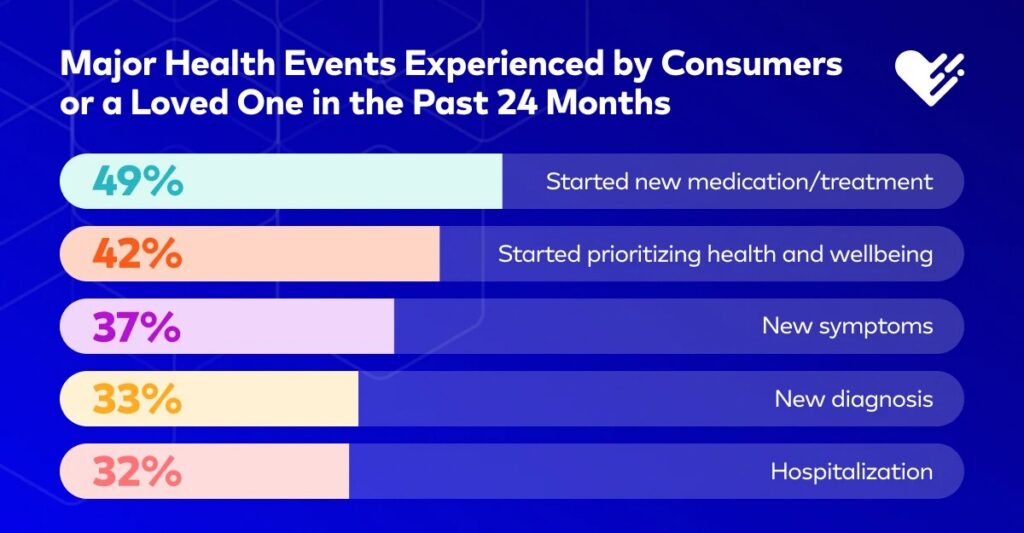
Unexpected health experiences are nearly universal. Healthgrades’ parent company recently conducted a survey to understand how significant health events affect people and found that nearly half started a new medication, treatment, or therapy in the past 24 months. Roughly one in three received a new diagnosis or were hospitalized, and 27% experienced a severe flare-up of a chronic condition.1
These moments don’t just have clinical effects. They disrupt daily life, introduce unfamiliar medical information, create financial strain, and force healthcare seekers to navigate a highly complex healthcare system—often without a clear roadmap.
Despite the urgency and uncertainty that often accompany a critical health development, many find it difficult to get the guidance they need.
The survey highlights a striking gap: Nearly 80% say they become more focused on their health after a significant health experience, yet 66% say it’s difficult to maintain that focus over time.1

The good news is that patients know where they want to turn. When a health question comes up, patients are more likely to turn to their doctor than any other source, and more than half want the ability to ask healthcare experts questions directly.2
For hospitals and health systems, these moments represent more than clinical touchpoints. They are opportunities to build trust, guide consumers through uncertainty, and create stronger long-term relationships. As such, healthcare organizations that support individuals during times of medical uncertainty can improve engagement, reduce anxiety, and help inspire more confident care decisions.
This special report explores how health inflection points shape patient behavior and outlines five strategies for health systems to better support patients during pivotal moments in the care journey.
Major Health Events Are Common and Often Overwhelming
Unexpected health experiences are a frequent part of the patient journey. According to a recent Health Events Survey conducted by Healthgrades’ parent company, when asked about health-related events that happened to themselves or a loved one in the past 24 months, nearly half of respondents (49%) reported starting a new medication or treatment.1 Many also experienced new symptoms (37%), received a new diagnosis (33%), or were hospitalized (32%) during that same time period.1
These health developments often represent defining turning points in a person’s life. Patients must quickly absorb unfamiliar medical information while evaluating treatment options and navigating healthcare decisions that may have long-term implications for their well-being.
At the same time, these situations can be emotionally and logistically overwhelming. Survey findings show that 78% of respondents experiencing a severe chronic condition flare-up report that it significantly impacts their daily lives, while 71% of those with new symptoms and 69% of those receiving a new diagnosis report a similar disruption.1

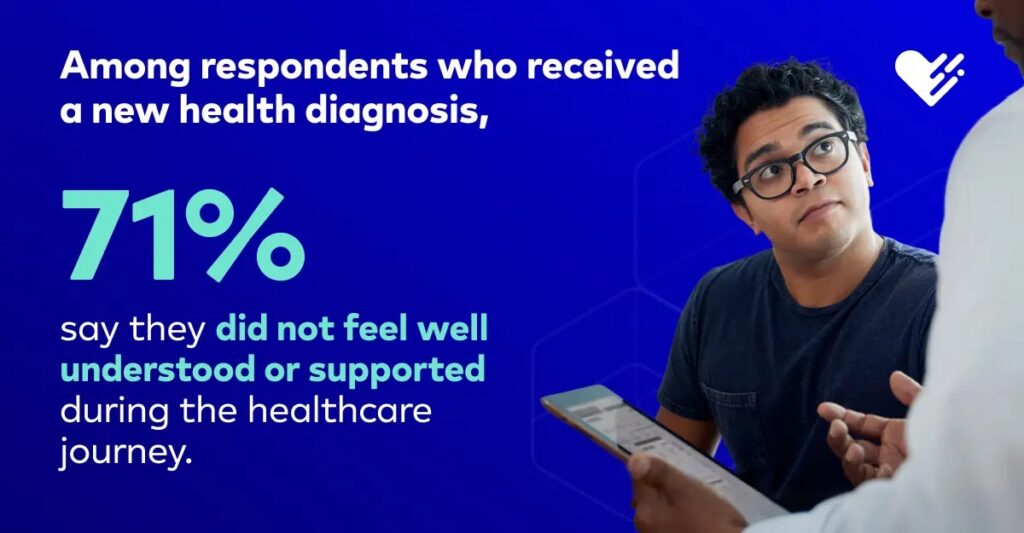
Despite the seriousness of these experiences, many individuals report feeling underprepared. Among respondents who received a new health diagnosis, 72% say they were not confident they had the information they needed, and 71% say they did not feel well understood or supported during the healthcare journey.1
External research suggests these types of challenges are becoming increasingly common. According to the CDC, approximately 75% of U.S. adults live with at least one chronic condition, and 50% live with two or more. Many of these conditions involve ongoing treatment changes, flare-ups, or new diagnoses.

When patients face these kinds of health disruptions, they often begin by searching for answers online. According to a Healthgrades Health Landscape survey, 80% of U.S. adults researched a health-related topic online in the past 3 months.3 This growing reliance on digital health information underscores the importance of strong online visibility and readily available educational resources.
Condition awareness initiatives can also play an important role in helping individuals understand symptoms and recognize when to seek care. By delivering the right information at the right moment, health systems and hospitals can improve confidence and support more informed healthcare decisions.
Patients Turn to Doctors and Health Systems for Guidance
When faced with a pivotal health experience, consumers most often turn to healthcare professionals for direction. A diagnosis, hospitalization, or new symptoms frequently shift patient priorities. According to the survey, 66% of respondents say that sustaining increased attention to their health becomes challenging over time, suggesting that many need continued support beyond the initial diagnosis or treatment.1
Patients are not just seeking clinical care during these periods. They’re also looking for guidance, reassurance, and clear next steps as they work to understand symptoms, evaluate treatment options, and navigate the broader healthcare system.
This desire for trusted medical direction is reflected in a separate Healthgrades survey, which found that doctors and nurses remain among the most trusted sources of public health information.2

When asked what types of support would be most helpful during health challenges, survey respondents most frequently cited:
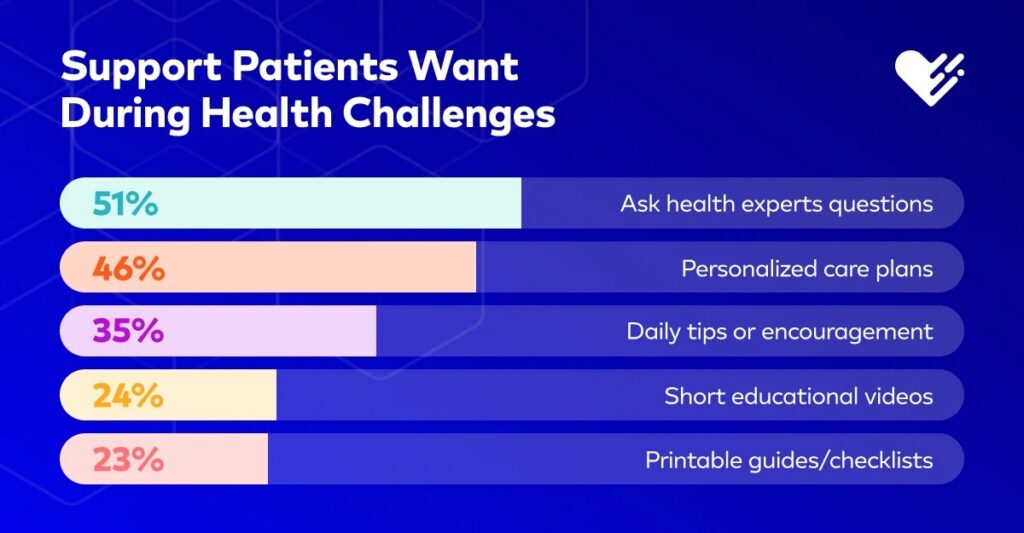
These responses highlight a growing demand for convenient, easy-to-understand resources that help patients manage their health between medical visits.
Five Ways Health Systems Can Better Support Patients During Critical Health Events
Health systems have a meaningful opportunity to support people during key points in their healthcare journeys. Insights from the Health Events Survey show several areas where care teams can provide education, direction, and reassurance.
The following five strategies show how organizations can respond to those needs while strengthening trust and connection.
1. Provide Easy Access to Health Experts
When patients face health challenges, connecting with trusted clinical expertise becomes especially important.
Survey respondents identified the ability to ask health experts questions (51%) as the most helpful type of support during health challenges.1
However, many still face barriers when trying to connect with the right healthcare professionals or find reliable medical information. In response, consumers are increasingly turning to digital tools for health guidance. EMARKETER research shows that 35% of U.S. adults already use AI tools to gain insight into their health and wellness, while another 27% are considering it, revealing growing demand for fast, personalized answers outside traditional care settings.
This trend reinforces the importance of helping patients connect with trusted expertise through healthcare organizations’ own digital channels. Strengthening the digital front door can make it easier for individuals to search for clinicians, schedule appointments, and find helpful health information online.
Investing in tools such as healthcare directories, digital scheduling, virtual care options, and patient education materials can help ensure patients receive timely guidance when they need it most. In turn, improving access to expert support can help everyone feel more confident navigating complex healthcare decisions.
2. Help Patients Understand Their Diagnosis
For many individuals, the most difficult part is not just the diagnosis itself but the uncertainty that surrounds it.
Survey data shows that 74% of patients experiencing a severe chronic condition flare-up say they were not confident they had the information they needed, and 75% say they did not feel well understood or supported during the experience.1 These findings reveal a gap for healthcare organizations to provide clearer information throughout serious health experiences.
External research supports this need for better patient education. The Agency for Healthcare Research and Quality (AHRQ) reports that those who receive understandable health information are more likely to participate in shared decision making and follow treatment recommendations.
Health systems can help address this need by providing accessible resources that explain symptoms, treatment options, and what to expect throughout the care journey.

Proactively providing this type of information can help reduce anxiety, improve communication between patients and clinicians, and support more informed healthcare decisions.
3. Deliver Clear Guidance After a Health Event
After receiving a diagnosis or beginning treatment, people often face new questions about how to manage their condition and what steps to take next.
Patients strongly value structured guidance, with 46% identifying personalized care plans as one of the most helpful forms of support during health challenges.1 Clear post-event guidance can help them understand follow-up care, medication changes, and lifestyle adjustments needed to manage their condition effectively.
Interest in digital support is also growing—76% of adults would be interested in app features that help them better understand their health over time, while 75% want personalized health recommendations based on their health data. These findings suggest that patients are looking for support that is not only clear but also ongoing and tailored to their needs.
Health systems can meet those expectations by creating more connected care pathways after a diagnosis or a change in treatment. For example, online scheduling systems can make it easier to book appointments and connect with specialists when questions arise. In fact, more than two-thirds of patients prefer to book appointments online, and 55% would consider switching to a doctor who offers that option—highlighting how critical easy access has become.4 At the same time, stronger referral coordination between clinicians can help patients move smoothly between primary care physicians, specialists, and support services. In fact, many organizations are already exploring various digital care options. According to EMARKETER research, 50% of healthcare leaders are prioritizing telehealth initiatives, and 47% are investing in remote patient monitoring over the next two years.
When healthcare organizations provide clear next steps and accessible care pathways, patients are more likely to remain engaged in their care and follow recommended treatment plans.
4. Address the Emotional Impact After a Diagnosis
Health issues often affect emotional well-being as much as physical health.
Those receiving serious diagnoses often experience increased anxiety and fear, which can make it harder to process complex medical information during clinical discussions. Research shows that patients forget 40% to 80% of the information shared during medical visits, particularly when the information is detailed or delivered during emotionally stressful moments. For example, a review published in Patient Education and Counseling found that effective physician-patient communication—including clear explanations, repetition of key information, minimizing medical jargon, and checking patient understanding—is essential for improving patient recall, comprehension, and adherence to treatment recommendations.
The Health Events Survey also reflects this emotional dimension of care. Many respondents reported feeling unsupported or misunderstood during challenging health experiences.1
This sentiment is widespread across health events: 75% of those who experienced a severe chronic condition flare-up say they didn’t feel well understood or supported, along with 74% of those with new symptoms and 71% of those who received a new diagnosis, reinforcing the importance of compassionate communication and patient-centered care.1
Healthcare organizations can help address these emotional challenges by:
- Integrating behavioral health support into care pathways
- Providing informational resources that acknowledge emotional concerns
- Offering peer support programs or patient communities
- Ensuring clinicians have tools to support empathetic communication
Addressing emotional well-being alongside clinical care can help improve patient satisfaction and strengthen long-term relationships between patients and healthcare professionals.
5. Help Patients Stay Engaged in Their Health Over Time
Unexpected health events often prompt people to focus more on their health.
Survey data shows that nearly 80% of consumers report becoming more focused on their health following a life changing event.1 However, sustaining that level of focus can be difficult—66% of respondents say maintaining that attention to their health becomes challenging as time passes.1
This drop-off in patient follow-through suggests a need for additional guidance to help individuals stay engaged in their care.
External research also points to the benefits of long-term patient engagement. The CDC reports that patients with higher levels of activation—meaning the knowledge, skills, and confidence to manage their health—tend to experience better health outcomes. Supporting that kind of involvement often requires ongoing reinforcement between visits, which is where digital tools can play an important role. With around 40% of consumers currently using health apps, health systems are well-positioned to support patients with tools that deliver relevant, consistent value over time.
These approaches work best when paired with practical touchpoints that help patients stay informed and actively involved in their care.
“It would be helpful to have easier access to trusted health information and guidance on small, everyday steps I can take to stay healthy, like nutrition tips, exercise plans, and stress management.”— Anonymous survey respondent, Health Events Survey
Examples of this kind of support include:
- Preventative care reminders and follow-up communications
- Educational newsletters and health resources
- Digital tools that help track symptoms or treatment progress
- Lifestyle guidance related to nutrition, exercise, or stress management
Providing continued support helps patients remain proactive about their health while reinforcing their relationship with their healthcare professionals.
Turn Health Events Into Opportunities for Better Patient Engagement with Healthgrades
“The data is clear: patients crave access to qualified guidance to help them navigate difficult health moments. At Healthgrades, we see our role as supporting patients throughout their care journey, from research to diagnosis and through every step of their recovery. We do this by offering solutions that empower hospitals and health systems to do what they do best—build relationships with patients and develop high-quality, holistic care plans.”
Luke Neenan, Senior Vice President, Healthgrades & Healthcare Services
Supporting patients through pivotal points in their care journey requires clear information, trusted clinician connections, and accessible digital tools. Healthgrades helps care teams deliver these experiences across the patient journey.
Healthgrades is a digital healthcare concierge that uses over two decades of clinical expertise, proprietary data, and clinician-backed algorithms to match patients with the most relevant doctors for their needs. This intelligence drives higher-value patient acquisition and more meaningful connections between patients and care teams.
Healthgrades is a digital healthcare concierge that uses over two decades of clinical expertise, proprietary data, and clinician-backed algorithms to match patients with the most relevant doctors for their needs. This intelligence drives higher-value patient acquisition and more meaningful connections between patients and care teams.
Connect with the industry’s most engaged audience of high-intent consumers. With 4.5 million active, appointable healthcare professionals*—more than any other health site—we ensure your HCPs are visible when care decisions are made.
Physician Profiles and Elevated ProfilesAs a physician, your online presence is often the first impression healthcare seekers have of you. Claiming and optimizing your free Healthgrades profile is a quick, effective way to showcase your expertise and build credibility with patients. For greater impact, an Elevated Profile highlights your expertise, removes competitor and consumer ads, and adds a direct scheduling link so patients can book with you more easily.
Get In TouchAdvertising Solutions
Healthgrades’ Advertising Solutions increase your visibility and drive patient acquisition when consumers are actively seeking care.
- Prominent branding & CTAs: Ensure your health system is seen first with prominently branded profiles and clear calls to action on healthgrades.com physician search results and doctor profile pages.
- Competitive intercept: Your physicians appear as alternatives on competitors’ profiles, redirecting opportunities to your health system.
- Syndication network: Extend your campaign’s reach across the Healthgrades network, including Healthline, Sharecare, and Medical News Today.
- SEO & SEM support: We complement your SEO and SEM strategies to maximize your relevance in search results and attract motivated healthcare shoppers.
- Optional online appointment scheduling integration: Meet patients on their own terms with our Online Appointment Scheduling (OAS) add-on, which seamlessly integrates with your existing EMR system to facilitate direct patient bookings from your profiles.
Brand & Marketing Solutions
With our Brand Solutions for Health Systems, Healthgrades places your health system’s brand in front of the industry’s most qualified and action-oriented audience at scale across web, CTV, and audio by utilizing Healthgrades Audience Intelligence proprietary data. This data combines billions of consumer behavioral site interactions and HIPAA-compliant, de-identified claims data with exclusive machine-learning modeling techniques to identify the consumers most likely to make an appointment soon.
HCP Marketing for Health Systems helps you reach, engage, and influence doctors with targeted, direct-to-physician advertising and communications solutions. This list-matched advertising solution breaks through the clutter and ensures the right healthcare professionals see your organization’s brand messaging. Run branded outreach across high impact digital channels, including email, display, and top healthcare sites trusted by physicians.
Automation Solutions
Healthgrades’ Automation Solutions for Health Systems and Practices streamline communication and improve operational efficiency. Powered by Medchat•ai, a customizable AI platform, our tools manage routine tasks like appointment scheduling, inbound calls, and specialty pharmacy coordination. With built-in HIPAA and SOC 2 Type 2 compliance, Medchat•ai ensures a secure, seamless experience for both patients and care teams, helping medical practices deliver faster, more responsive service at scale.
Quality Insights Platform
For health systems seeking data-driven growth and recognition, Healthgrades’ Quality Solutions delivers actionable intelligence. Custom dashboards track performance trends and real-time data to support informed operational decisions. EHR integration improves workflows and care experiences without heavy implementation costs. Market differentiation allows organizations to promote their Healthgrades Quality Awards to highlight excellence and stand out in competitive markets.
Turn life changing health moments into stronger patient relationships. As hospitals look to better support people during health inflection points, Healthgrades can help your organization create more meaningful digital experiences that improve engagement and drive measurable impact.
Survey Methodology
Healthgrades’ Health Events Survey was conducted October 25–30, 2025, among 2,096 U.S. adults. The survey explored how major health events affect patient behavior, decision-making, and engagement with healthcare resources. Results were not weighted to be representative of all US adults.
¹ RVO Health, Health Events Survey, Oct 25-30, 2025; N=2,096 U.S. consumers (Suzy On-Demand).
2 RVO Health, Consumer Healthcare Study, May 2024, n=2,985; Among US Gen Pop (n=2,535), Gen Z (n=219), Millennials (n=706), Gen X (n=704), Boomers+ (n=906)
3 RVO Health, Health Landscape Survey, Feb 2026, N=1,000 US consumers weighted to be representative of the US population
4 Healthgrades (in partnership with RVO Health), Reviews and Online Booking Survey, April 14–May 15, 2025; N=1,089 U.S. consumers.
5 KFF (Kaiser Family Foundation). Health misinformation and trust survey. 2023.
https://files.kff.org/attachment/Topline-KFF-Health-Misinformation-Tracking-Poll-Pilot-August-2023.pdf
6 EMARKETER. Health and Fitness App Usage 2026. February 27, 2026. https://www.emarketer.com/content/health-trends-watch-2026
7 Kessels, R. P. (2003). Patients’ memory for medical information. Journal of the Royal Society of Medicine, 96(5), 219–222. https://doi.org/10.1177/014107680309600504
8 Makoul, G., Krupat, E., & Chang, C. H. Measuring patient views of physician communication skills: Development and testing of the Communication Assessment Tool. Patient Education and Counseling. 2010. https://pmc.ncbi.nlm.nih.gov/articles/PMC3771166/
9 Centers for Disease Control and Prevention. Patient Engagement and Health Outcomes. 2024. https://www.cdc.gov/health-literacy/php/research-summaries/patient-engagement.html
*Inclusive of: Physicians, Dentists, Mid-Level Practitioners, Counselors, and other Healthcare Professionals.