
Key Takeaways
- Patients often begin a doctor search without knowing the exact condition, procedure, or specialist they need.
- Clinical intelligence helps connect everyday search language with specialties, conditions, procedures, and physician experience that may best fit a patient’s needs.
- Relevant experience, patient satisfaction, hospital quality, and accessibility each factor into the decision.
- Healthgrades brings these signals together to help patients find doctors who may align with their needs and move forward with greater confidence.
More information does not make choosing a doctor any easier. In fact, it can lead to decision paralysis as patients try to determine which doctor fits the full picture of their needs.
Patients may know what they are feeling without knowing the clinical terms for it, which condition could be causing it, or what type of doctor they should see. A patient with knee pain, for example, may not know whether they need an orthopedic surgeon, a rheumatologist, a physical therapist, or another healthcare professional. Effective physician search should help make those connections instead of expecting patients to already understand how healthcare is organized.
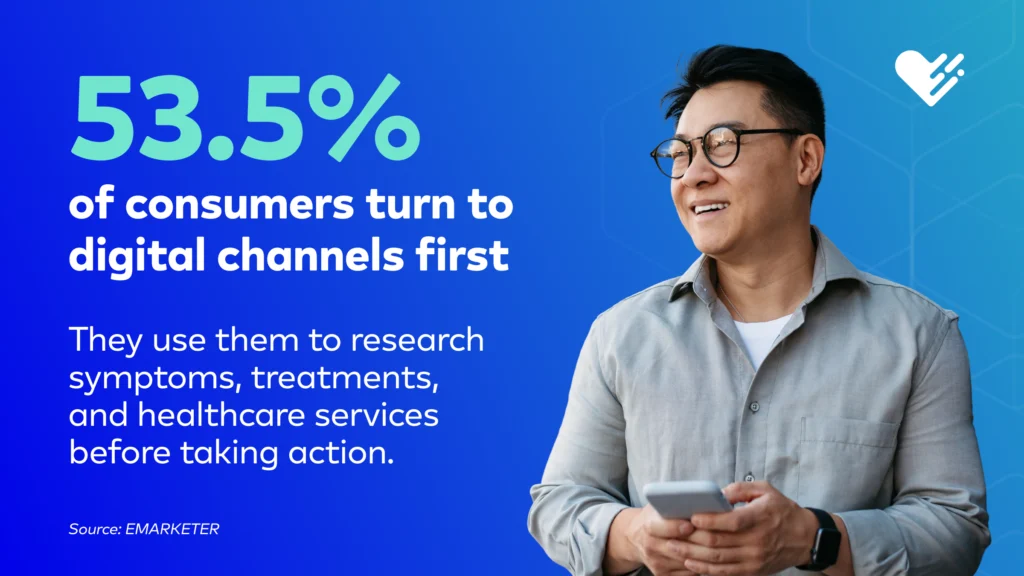
According to EMARKETER, digital channels are the primary source of medical information and guidance for 53.5% of consumers, who use them to research symptoms, treatments, and healthcare services before taking action.
That is why effective healthcare navigation requires more than keyword matching. It begins with understanding what patients mean, even when they do not know the clinical language for what they need. By interpreting patient intent and applying clinical context, physician search can connect patients with doctors who best align with their needs.
Ultimately, finding a doctor who fits a patient’s needs is a bit like following a recipe. No single ingredient decides the outcome. It depends on several factors, how they come together, and what the patient needs at that moment.
How does Healthgrades help patients find the right doctor?
Healthgrades helps patients evaluate doctors by bringing together several factors, including:
- Relevant clinical experience
- Patient satisfaction and communication
- Hospital quality
- Accessibility, such as distance, insurance, and office availability
These factors aren’t meant to say one doctor is always better than another. Instead, they give patients a more complete picture of which doctors might fit their needs, preferences, and situation.
Why is healthcare search different from other online search?
Healthcare searches are different because patients often start without all the information they need.
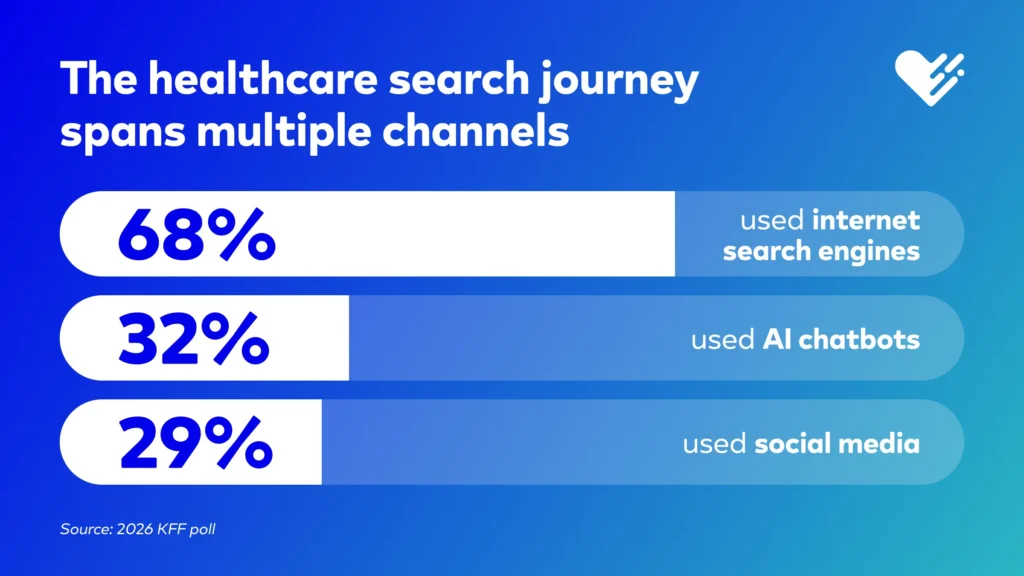
Patients also move across search engines, health websites, social platforms, and emerging AI tools as they research care. A 2026 KFF poll found that 68% of U.S. adults had sought health information from internet search engines in the past year, while 32% had used AI chatbots and 29% had turned to social media. Understanding how patients find care today can help health systems meet them earlier in that journey.
When booking a hotel, people usually know the city, dates, budget, and what amenities they want. But a patient might only know that their knee hurts.
That broad symptom could point to:
- A minor injury
- Arthritis
- A torn ligament
- A condition affecting the hip or spine
- A need for physical therapy
- A need for surgery
Patients might not know the right medical terms or which type of doctor they need. A good physician search tool should understand the meaning behind what patients type, not just match the literal words.
Healthcare searches reflect different stages of care
Patients may search for a doctor because they are:
- Experiencing a symptom for the first time
- Managing a chronic condition
- Seeking a second opinion
- Preparing for a specific procedure
- Looking for a new doctor after relocating
- Reconsidering care because a treatment is no longer working
Each situation calls for a different amount of detail.
A broad search should let patients explore their options. A search focused on a specific condition or procedure should help narrow down choices in a way that makes sense for their care.
How does clinical intelligence improve physician search?
A physician directory can do more than display a list of names. When supported by clinical intelligence, it can connect the language patients use with the way healthcare is organized.
Patients often search in nonclinical terms, such as:
- “My knee hurts”
- “Hand numbness doctor”
- “Specialist for irregular heartbeat”
- “Who treats severe migraines?”
Although patients search using everyday language, those searches often relate to a network of symptoms, conditions, specialties, procedures, and physician experience. The Healthgrades physician search experience uses clinician-informed data models to understand those relationships.
These models help connect:
- Symptoms to possible conditions
- Conditions to appropriate specialties
- Procedures to physician experience
- Physicians to hospital affiliations
- Patient needs to practical access information
The goal is not to make patients search like clinicians. Instead, it’s to help the search experience interpret patient intent, connect everyday language with clinical concepts, and surface physicians who may be most relevant to the patient’s needs.
Why does search specificity matter?
The more information a patient provides, the more focused the results can become.
A search for an orthopedic surgeon is too broad; it covers the knee, hip, shoulder, spine, hand, etc. But ACL reconstruction is more specific. It provides clear intent about the type of care the patient may need. The results should reflect that difference.
Broad searches require broader context
When a patient searches by specialty alone, it may be helpful to surface physicians with experience across a range of related conditions and procedures.
Specific searches support more precise discovery
When a patient searches for a specific condition or procedure, the search can place greater focus on physician experience related to that need.
The level of detail in the results should match the specificity of the patient’s search.
What factors help patients evaluate a doctor?
No single factor tells the full story about a physician. Reviews, clinical experience, insurance acceptance, location, and hospital quality each answer a different question patients may have when choosing care.
1. Clinical experience
Relevant clinical experience helps patients understand whether a physician regularly treats their condition or performs the procedure they may need.
That experience can include:
- Specialty experience
- Condition-specific experience
- Procedure-specific experience
- Breadth of related clinical experience
- Depth of experience in a focused area
A patient searching for a cardiac surgeon may need broad information about physicians who perform cardiac procedures. Someone seeking valve replacement may need more focused experience.
Clinical experience is an important factor, but it does not determine the entire decision.
2. Patient satisfaction and communication
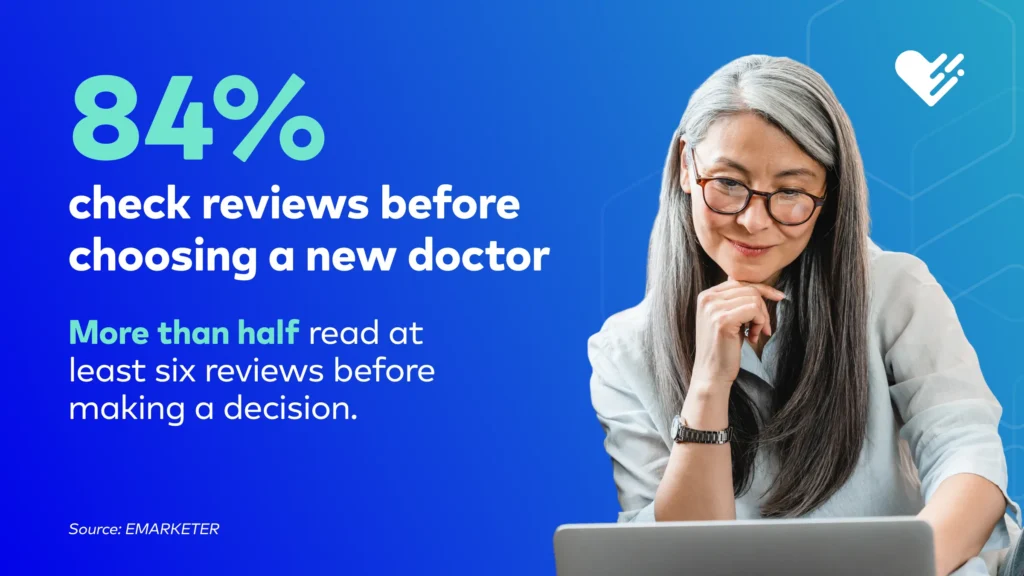
Patients also want to know what it may be like to receive care from a physician, which is why reviews play a central role in their research. According to research cited by EMARKETER, 84% of patients check online reviews before choosing a new doctor, and 51% read at least six reviews before deciding.
Reviews and patient surveys can offer insight into:
- Whether patients felt heard
- How clearly the physician explained care
- Whether patients trusted the physician’s recommendations
- How well the office communicated
- Whether patients felt respected
- Overall satisfaction with the care experience
These factors reveal the personal side of care. However, reviews are most useful when considered alongside information about clinical experience, quality, and accessibility.
Why are reviews alone not enough?
Reviews provide valuable context, but they tell only part of the story. They may describe communication, trust, or the office experience, but they may not show whether the physician:
- Regularly treats the patient’s condition
- Performs the needed procedure
- Practices at a hospital with strong outcomes
- Accepts the patient’s insurance
- Has a convenient location
- Offers appointments when care is needed
A more complete doctor search combines reviews with other relevant evidence.
3. Hospital quality
For physicians who perform procedures or treat patients in hospital settings, hospital quality provides additional context.
Healthgrades has evaluated hospital performance for more than 25 years, including complication and mortality outcomes across inpatient and outpatient conditions and procedures. These measures can help patients understand how hospital quality may influence their decision.
Hospital quality can show:
- Where a physician performs procedures
- How the hospital performs for the care needed
- Whether complication rates are lower or higher than expected
- Whether mortality outcomes provide additional context
- How the care setting may shape the overall experience
A doctor does not provide hospital care alone. The hospital, medical team, and care setting all contribute to the patient experience, making hospital quality especially important for complex procedures.
4. Accessibility
A physician may have relevant experience and positive patient feedback, but patients still need to be able to access that care.
Accessibility can include:
- Distance
- Insurance participation
- Office locations
- Appointment availability
- Evening or weekend hours
- Online scheduling
- Other practical barriers to care
Accessibility also includes what happens after a patient chooses a physician. Online scheduling can create a clearer path from research to action and reduce friction when the patient is ready to book.
Accessibility does not mean the same thing for every patient
For routine care, proximity and scheduling convenience may be especially important. Patients seeking complex surgery, however, may be willing to travel farther for a physician and hospital that more closely align with their clinical needs. The right balance depends on the type of care they need.
Is there one “best doctor” for every patient?
Thinking there’s one “best doctor” for everyone makes a complex, personal decision seem too simple. The right physician may depend on:
- The patient’s symptoms or diagnosis
- The type of treatment or procedure needed
- The stage of the patient’s healthcare journey
- Communication preferences
- Insurance coverage
- Location and travel flexibility
- Appointment availability
- Hospital quality
- Personal priorities
The importance of each factor varies depending on the patient’s needs. For some patients, convenience is most important, while for others, a doctor’s experience with a certain procedure or hospital results matter more.
How does Healthgrades bring the signals together?
Healthgrades uses multiple positive signals to evaluate which physicians may align with a patient’s needs. The approach considers available information across areas such as:
- Clinical experience
- Patient satisfaction
- Hospital quality
- Insurance participation
- Location
- Office access
- Appointment pathways
The exact combination depends on what the patient searches for and how much context is available. This approach organizes complex healthcare information to help patients make better choices.
Better physician discovery supports better decisions
Patients shouldn’t have to be experts to make sense of scattered healthcare information. They should be able to:
- Search using familiar language
- Add more detail when they have it
- Understand why certain physicians may be relevant
- Compare the factors that matter to them
- Move from research to action with greater confidence
The best healthcare search experiences make that possible by simplifying complex information without limiting patients’ choices. Healthgrades brings together different types of information because good healthcare decisions rarely rely on a single data point. By combining clinical intelligence with physician experience, patient satisfaction, hospital quality, and accessibility, Healthgrades helps patients make sense of complex healthcare information and move forward with greater confidence.
How can Healthgrades help patients find the right doctor?
Healthgrades offers solutions that enable health systems to create clearer physician discovery experiences and smoother paths to care.
- Elevated Profiles: Give physicians a richer, ad-free profile that provides patients with more comprehensive information to support informed decision-making.
- Sponsored Profiles: Increase physician visibility when patients are actively researching care, helping connect consumers with doctors who truly meet their needs.
- Online Appointment Scheduling: Create a seamless path from physician research to scheduling, reducing friction once patients are ready to book an appointment.
- Quality Awards: Highlight nationally recognized clinical outcomes that provide additional context as patients evaluate their options.
- Brand Solutions: Connect health systems with high-intent healthcare consumers throughout their physician discovery journey.
Help patients find the right physician.
Contact us to learn how Healthgrades can help your organization simplify physician discovery, support more informed care decisions, and connect patients with the physicians who best meet their needs.