
Key Takeaways
- Consumers often begin their digital patient journey on search engines, health websites, and AI tools.
- Health systems have earned trust, but that trust is not always present when patients are making decisions online.
- AI is changing how patients find health information and raising new concerns about misinformation and patient safety.
- A stronger patient engagement strategy helps health systems connect patients with trusted information and care earlier in the journey.
Health systems are among the most trusted organizations in their communities. This trust comes from years of clinical expertise, quality care, strong patient relationships, and being part of people’s daily lives.
However, patients are often outside your facilities when they make their next healthcare decisions.
They search symptoms from their couch, compare treatment options late at night, and increasingly turn to AI tools to understand what might be wrong and what they should do next. By the time they come across your information, their understanding of the problem may already be shaped by outside sources.
For years, healthcare marketers viewed the website, physician directory, referral path, or contact center as the digital front door. Those touchpoints still matter, but they are no longer where the patient journey starts.
Now, the first step often happens in a search bar, on a health website, or in an AI chat window. Patients want answers before they know which specialist they need, what questions to ask, or whether care is necessary at all.
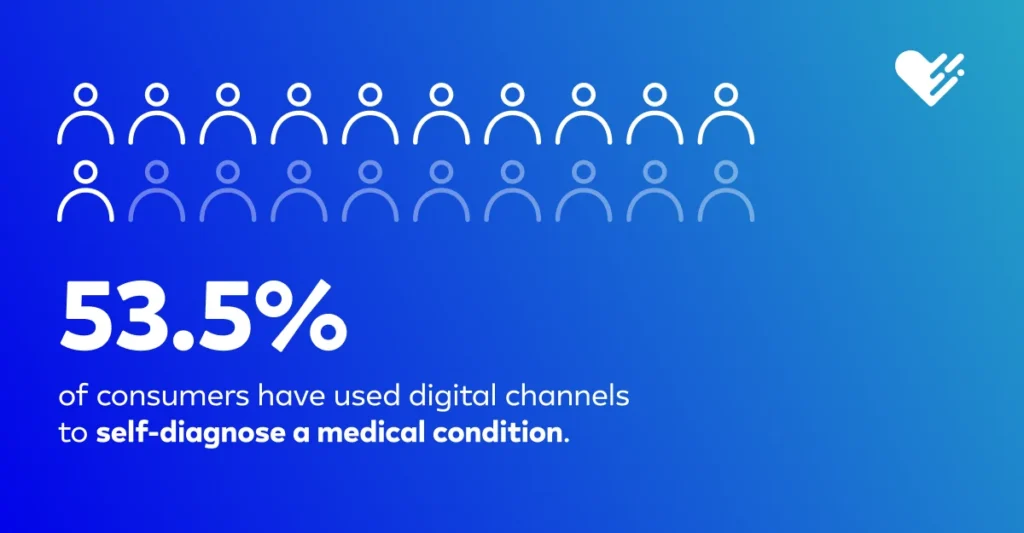
According to eMarketer’s 2025 Healthcare Consumer research, 53.5% of consumers have used digital channels to self-diagnose a medical condition, with search engines and health information websites ranking among the most valuable resources.
This means patients are not waiting for health systems to educate them. They are learning on their own first. The challenge is that information alone does not help patients move forward. At some point, patients need to connect what they learn to a real care decision, whether that means choosing a specialist, evaluating quality information, or scheduling an appointment.
As such, a modern patient engagement strategy must support the real digital patient journey, especially the moments before a patient reaches your front door.
The Trust Health Systems Have Built Doesn’t Travel
Health systems have something many digital platforms do not: earned clinical credibility. Patients trust the doctors, nurses, specialists, and medical teams in their communities because they have seen that expertise in action. But that trust does not automatically follow patients into digital spaces.
When someone searches for symptoms at midnight, asks AI about chest pain, or compares treatment options online, they may never encounter your organization’s expertise. They may not understand what services are available locally, which specialists are best suited for their needs, or when care is necessary.
This creates a growing gap between where health systems have authority and where patients are making decisions.
At the same time, more consumers are acting on what they find online. eMarketer reports that 60% of U.S. adults have used AI for medical information. Among health-focused AI users, 1 in 4 acted on AI guidance without consulting a doctor, and 18% have adjusted their medication based on an AI interaction.
This is why AI in healthcare marketing is about more than visibility. AI is changing where patients look for answers and how quickly those answers can influence their actions.
The goal is not to compete with every search result or AI response. Instead, it is to make sure trusted, medically reviewed guidance is available when patients are forming opinions, weighing risks, and deciding what to do next.
Why the AI Information Gap Has Become a Patient Safety Concern
When patients use digital tools to learn about their health, they often want reassurance, clear answers, or a next step. But not every tool can safely provide that guidance.
AI-generated health information can sound confident even when it is incomplete, misleading, or unsafe. This matters because patients may not always realize when a response needs a clinical review.
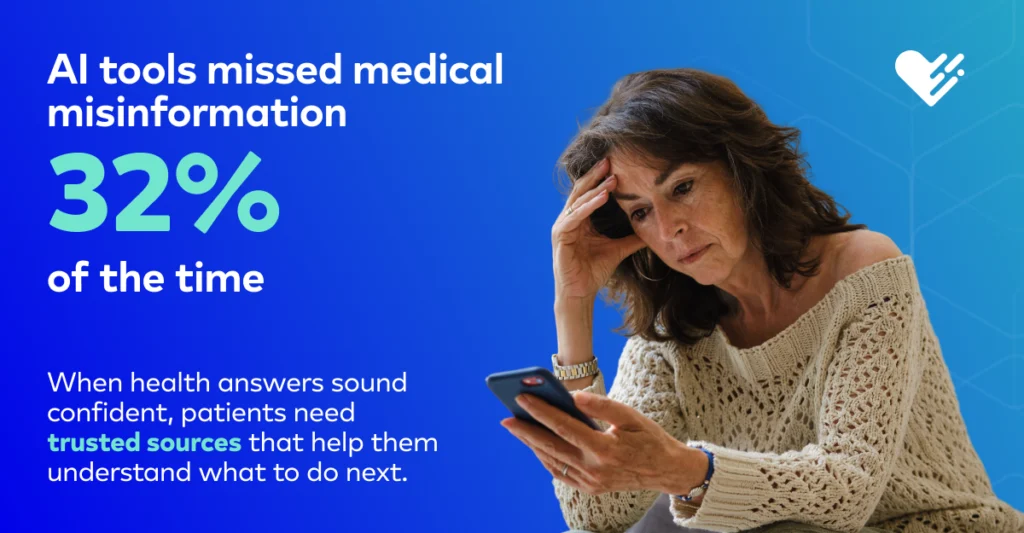
According to eMarketer, AI tools failed to correctly identify or flag medical misinformation 32% of the time. Safety warnings have also become less common in AI-generated health responses over time: in 2025, only 1% of AI health outputs included a safety warning, down from 26% in 2022.1
Meanwhile, consumers are acting on what they learn. eMarketer reports that 32% tried a new health behavior based on an AI suggestion.
For health systems, this is no longer just a marketing challenge, but a patient safety gap.
Patients are asking clinical questions in places that are not clinical settings. When trusted healthcare expertise is absent from those moments, people may make important health decisions without the context they need.
This does not mean patients should stop using AI or searching online. It means health systems have an opportunity to be more visible, more helpful, and more actionable earlier in the journey.
Trust Is Your Competitive Moat
The rise of AI has not diminished the value of trusted medical expertise. Patients might use AI for convenience, but when the stakes become personal, many still prefer guidance from healthcare professionals.
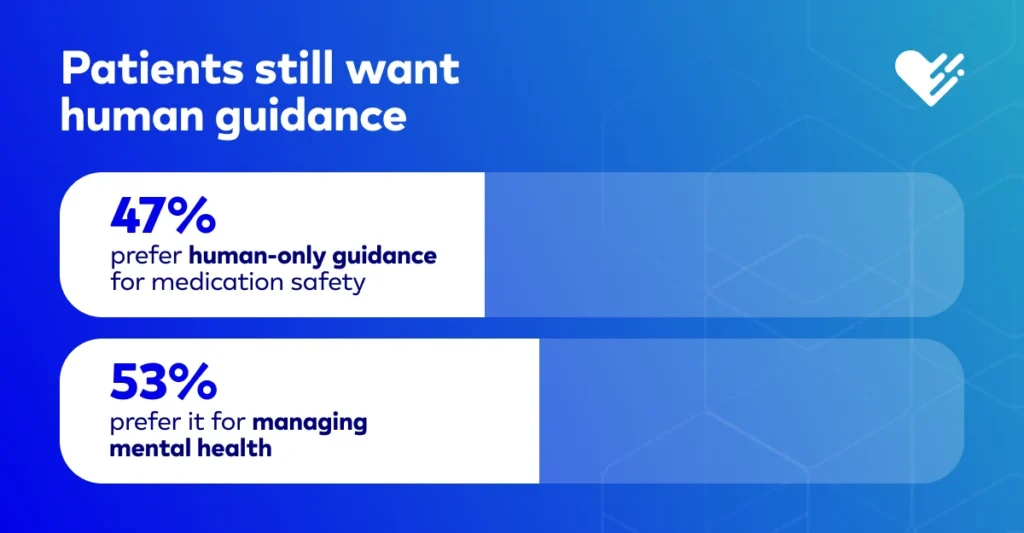
A Boston Consulting Group survey of 13,353 global consumers found that 47% prefer human-only guidance for medication safety and 53% prefer human-only support for managing mental health.2 Zocdoc data cited by eMarketer also shows consumers are roughly four to nine times more likely to consult a doctor than turn to AI for diagnoses, treatments, and new medical concerns.2
RVO Health’s HL & HG Media Online Health Landscape Survey, cited in the Fullspan Health white paper, also found that 59% of consumers view health information sites as their most trusted source for medical research.3
The opportunity is clear: patients still want trusted healthcare guidance. Health systems already have the credibility patients need. The challenge is making that credibility visible before patients make a decision.
This is where trust becomes more than a brand message. It becomes a competitive moat.
Health systems have clinical expertise, local knowledge, quality outcomes, established physician relationships, and direct access to care. These strengths have been built over years of patient interactions and community presence, making them difficult to replicate.
Health systems have already earned trust. The real question is whether that trust is present when patients are researching symptoms, evaluating treatment options, deciding whether to seek care, and choosing where to go next.
Trust is a competitive advantage, but it only creates value when patients can access it before they make their decision.
The Missed Opportunity in the Middle of the Journey
Many hospital marketing strategies focus on two parts of the patient experience: building awareness before there is a need and supporting satisfaction after care is delivered.
However, it is in the middle of the journey where many decisions are made.
This is the stage when patients compare treatment options, decide if their symptoms are serious, figure out which specialty they need, and prepare questions for a doctor they have not yet booked.
This is also the point where patient acquisition often takes place.
According to RVO Health’s HL & HG Media Online Health Landscape Survey, cited in the Fullspan Health white paper, 83% of consumers say they are looking for practical next steps, not more content to read.3 The same research found that patients were significantly more likely to book an appointment after a digital health experience that actually met their needs.3
This finding is important. Patients do not need more passive content; they need guidance that helps them take action.
A stronger digital patient journey links education to action. It helps patients understand what they are learning, identify appropriate care options, and confidently connect with the right doctor.
Organizations that provide that guidance can begin building trust long before the first appointment.
What a Modern Patient Engagement Strategy Requires
Being present earlier in the patient journey does not mean launching another app, publishing more blog posts, or adding AI just because it is popular.
It means creating a patient engagement strategy based on what people truly need at each moment.
Be Present Where Decisions Start
Patients already use search engines, health websites, and AI tools to understand symptoms and treatment options. Health systems need high visibility in those moments, not just when patients already know who to contact.
Be Credible When Information Feels Uncertain
Clinical expertise matters most when patients feel unsure. Medically reviewed information, quality signals, physician details, and clear explanations help patients make informed decisions.
Be Useful, Not Just Visible
Patients want practical guidance. Content should answer real questions, clear up confusion, and help people understand what comes next.
Be Action-Oriented
Education should lead somewhere. Whether patients need to compare care options, identify the right specialist, understand urgency, or prepare for a conversation with a doctor, guidance should make action easier.
How Healthgrades Helps Health Systems Turn Research Into Action
Healthgrades helps health systems extend their clinical authority into the moments where healthcare decisions are being made.
As a trusted healthcare marketplace, Healthgrades combines physician information, quality insights, healthcare content, and consumer intent signals to help patients move from research to action while helping health systems connect with high-intent consumers at critical decision making moments.
Healthgrades offers solutions designed to increase visibility, build credibility, and reduce friction throughout the digital patient journey.
For Health Systems
- Advertising Solutions (Sponsored Profiles): Ensure your physicians and service lines are prominently visible when patients are actively researching care options. With premium placement, branded physician profiles, and clear calls to action, your health system appears first in healthgrades.com search results and doctor profile pages. Your physicians are also featured as alternatives on competitor profiles, helping your health system connect with patients during critical decision-making moments. In addition, your campaigns are syndicated across the Healthgrades network, including Healthline, Sharecare, and Medical News Today.
- Brand Solutions: Reach high-intent healthcare consumers across digital channels using Healthgrades Audience Intelligence, ensuring your health system is visible to patients actively researching symptoms, conditions, treatments, and care options. Maximize your brand’s reach on Healthgrades and extend it wherever consumers are engaging across CTV, web, video, and audio.
- Online Appointment Scheduling (OAS): Reduce friction and allow patients to book directly once they’ve made a decision. Fully integrated with your health system’s existing EMR, this solution supports real-time appointment scheduling, cancellations, and rescheduling directly from your doctors’ profiles, helping patients move from research to care without unnecessary barriers.
- Quality Awards: With Healthgrades Quality Awards, you can showcase your hospital’s clinical excellence and bring your national and specialty recognitions to the forefront of your brand. From award-winning care to data-backed outcomes, make it easy for patients to see why they should choose your organization as they compare options and evaluate where to seek care.
For Physicians and Other Healthcare Professionals
Your Healthgrades profile is often one of the first places patients learn about your background, expertise, and approach to care. Claiming and optimizing your free profile helps ensure patients can easily find accurate details about your practice, credentials, and patient reviews while they are actively evaluating care options.
Elevated Profiles take that visibility a step further by highlighting your areas of expertise, removing competitor and consumer ads, and adding a direct scheduling link. This creates a more seamless experience for patients, helping them move from researching doctors to booking care with confidence.
Patients are making healthcare decisions long before they schedule an appointment. Health systems and physicians that are visible, credible, and easy to connect with during those moments are better positioned to turn patient intent into action.
Get in touch with us today to learn how Healthgrades can help you turn healthcare decisions into meaningful connections with care.
1eMarketer, GenAI chatbots are prone to perpetuate healthcare misinformation.
2eMarketer, Consumers value AI for health info, but prefer human guidance as risks escalate.
3RVO Health, HL & HG Media Online Health Landscape Survey, cited in Fullspan Health white paper, Healthcare Has an Action Gap: Here’s What’s Driving It, and How to Close It.