GLP-1 medications are gaining popularity among patients—here’s what this means for health system service lines.
Weight loss isn’t easy, but as demand for weight-loss treatments grows, health systems have a unique opportunity to expand their service lines. With increasing interest in weight-loss medications—especially GLP-1 therapy—there is much to explore about consumer perspectives and doctors’ approaches. Understanding these insights can help health systems navigate this emerging area of healthcare effectively.
For those unable to reach their goals through exercise and diet alone or who have conditions that make weight loss especially challenging, medications are an increasingly common treatment option. Recently, GLP-1 medications like Ozempic, Wegovy, and Mounjaro have gained popularity for their weight loss properties.
Originally developed for type 2 diabetes, GLP-1 medications improve glucose control and reduce cardiac risks. They also show promise in weight management, helping both diabetic and non-diabetic patients with obesity. Clinical trials report up to 15% body weight loss in some patients.
These impressive outcomes have captured the attention of both doctors and the general public, leading to an increase in GLP-1 prescription rates. According to an analysis from Trilliant, prescription volumes rose 300% between 2020 and 2022. With celebrity endorsements, social media testimonials, and mainstream media coverage spreading patient success stories, demand for GLP-1 medications is expected to continue growing. In fact, J.P. Morgan Research predicts that the GLP-1 market will exceed $100 billion by 2030, driven equally by diabetes and obesity usage.
With the growing prominence of GLP-1 medications, health systems must stay informed and adapt to the changing dynamics of weight-loss treatments.
Consumer Thoughts on GLP-1 Therapy
Healthgrades conducted a consumer and physician survey from March 26 to April 16, 2024. The respondents included 978 consumers seeking weight loss for health-related reasons and those interested in taking weight-loss medication.
Nearly all surveyed consumers were familiar with weight-loss medications through research or their own experience taking them.
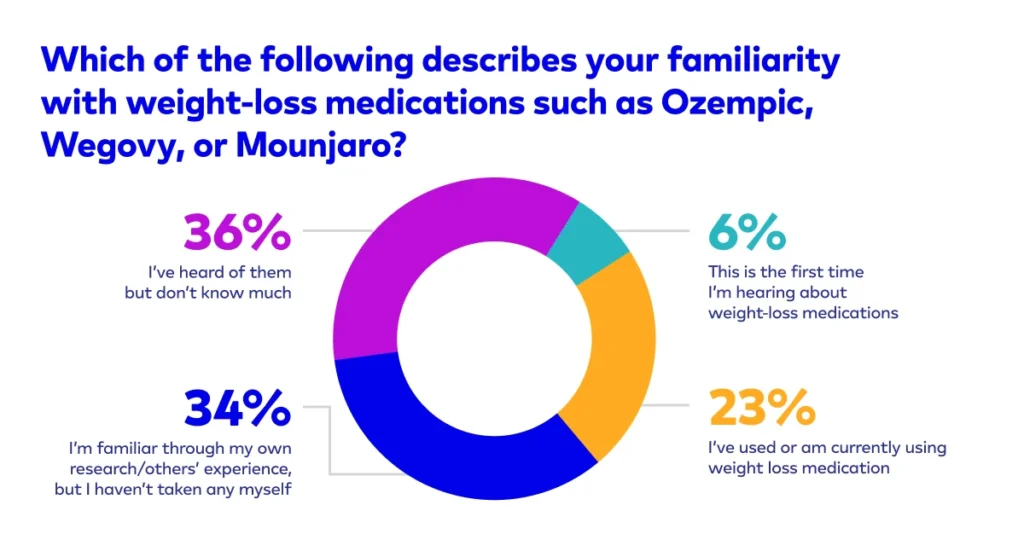
While many consumers are familiar with the brand names of GLP-1 medications on the market, far fewer are aware of compounded semaglutide medications. Compounded GLP-1s are created by compounding pharmacies, which mix ingredients to produce a drug similar to the branded versions. However, due to patent restrictions, they do not use the exact same ingredients as the FDA-approved medications. The rise of these compounded versions is primarily due to drug shortages affecting name-brand GLP-1s, leading the FDA to relax certain restrictions.
Despite being less regulated, compounded semaglutide medications are widely available and often lack strict usage guidelines. This lack of oversight can pose significant risks to consumers, as highlighted by recent reports on overdose dangers and the potential for misuse. Among surveyed consumers, 40% have heard of these compounded versions, and this group is significantly more likely to have used GLP-1s or researched them. While compounded semaglutide medications are easily accessible online with minimal doctor oversight, nearly 80% of consumers would consult their doctor first before trying any weight-loss medication—but this also means around 20% might take unnecessary risks without professional guidance.1 As such, health systems should educate people on the dangers of these compounded drugs to help prevent potential harm.
Despite potential risks, a notable 82% of surveyed consumers who want to lose weight are somewhat or very interested in trying these new weight-loss medications.1 The most interested groups are those ages 25 to 54, individuals with a much higher incidence of health conditions across the board, and those with a high income. Interest in these drugs remains high, regardless of how long respondents have been attempting to lose weight. Among those who are interested in trying weight loss medications, more than 80% have high cholesterol, and a similar percentage have hypertension—both conditions that can be better managed through GLP-1 therapy.
But besides chronic condition management, why else are patients gravitating toward GLP-1s? Our survey points to these leading reasons:1
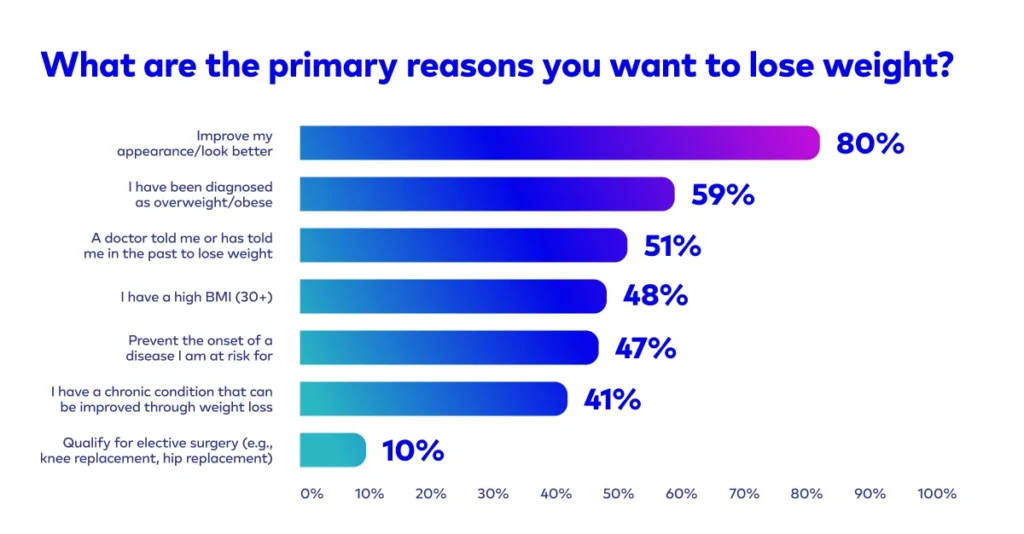
Men’s and women’s reasons for wanting to lose weight were generally similar. However, women in our study were 9% more likely than men to mention improving their appearance and 61% more likely to cite having a high BMI.
Survey respondents who want to lose weight because they have been diagnosed with obesity or being overweight are more likely to be over 45, have a lower income, or have been trying to lose weight for more than ten years. Interestingly, patients whose reasons include being advised by their doctors to lose weight tend to be slightly younger and are more likely to have been diagnosed with medical conditions, such as sleep apnea, fatty liver disease, and cardiovascular conditions.1
Survey respondents also have high expectations for GLP-1 medications. Around 84% expect to be somewhat or much more successful at losing weight using GLP-1 therapy compared to other weight loss strategies they’ve tried. They believe the medication will help decrease appetite (76%) and reduce cravings (73%).1 These consumers also feel that losing weight will help them feel more comfortable in clothing (76%), more energized (74%), and more physically active (72%).1 However, many patients face challenges when trying to implement GLP-1 therapy as part of their weight loss plan.
Potential Roadblocks
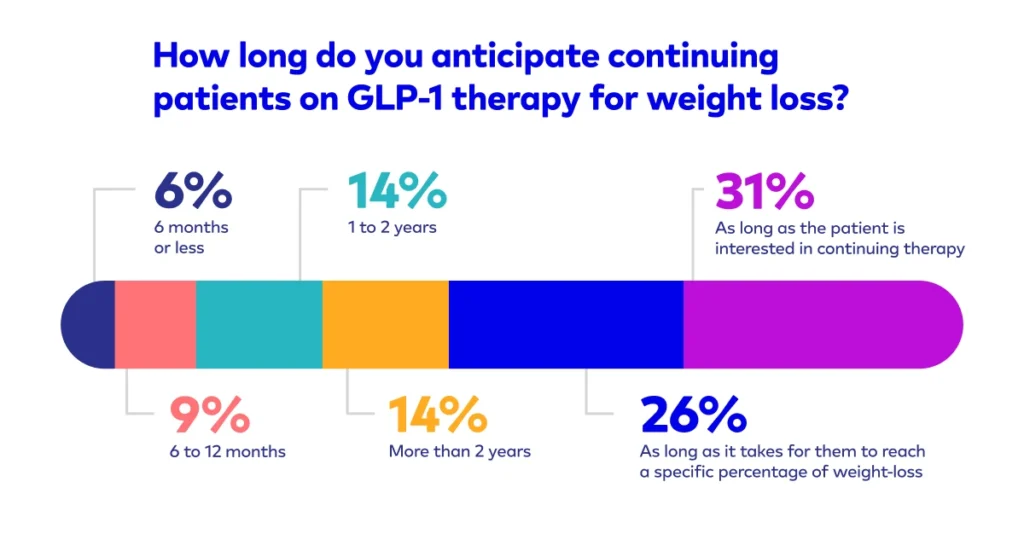
Despite most survey respondents expressing interest in prescription weight loss medication, less than a third say their doctor has brought it up proactively.1 Additionally, many patients are unaware that GLP-1 therapy requires a lifelong commitment rather than being a short-term solution. In fact, 49% of survey respondents expect to be on weight-loss medications for one year or less to achieve their goals. However, to have more realistic expectations, consumers should recognize that GLP-1s are likely a lifelong commitment, perhaps just at a lower dose. Discontinuing GLP-1 agonists often results in significant weight regain.
Health systems should address these misconceptions by providing easily accessible FAQs online, offering practical guidance for discussing GLP-1 options with doctors, and sharing cost-saving recommendations and real-life stories that highlight both successes and challenges. For those who opt for GLP-1 therapy, ongoing education and regular monitoring are essential to track progress and address setbacks. Additionally, hospitals and practices should implement robust patient education programs and support systems, including nutrition counseling and lifestyle modification classes, to help maximize the benefits of GLP-1 treatment.
Financial barriers also pose a significant challenge. Many consumers interested in GLP-1s lack the resources to pay out-of-pocket. Since GLP-1s are intended for lifelong use, associated healthcare costs can add up and deter interested prospects. Around 48% of consumers interested in GLP-1s feel they cannot afford to pay out-of-pocket for these prescriptions, and 22% can only afford a maximum of $500 per month.1 Although the cost of GLP-1 therapy varies, monthly expenses typically range from $500 to over $1,300. Additionally, increasing demand may drive the price higher.
Limited insurance coverage further exacerbates cost concerns. Only 12% of survey respondents report their insurance covers the cost of weight-loss medication,1 with many insurers cutting back on coverage due to high demand and costs for GLP-1 drugs. However, some insurers, including Cigna, are planning to increase coverage. The FDA’s recent approval of Wegovy to treat cardiovascular conditions has widened the drug’s target audience, prompting a few health companies like Kaiser and CVS to expand their coverage.
Despite these barriers, strong patient demand for GLP-1s doesn’t appear to be wavering anytime soon. In a 9amHealth survey of 1,300 Americans, more than 67% of respondents said they would stay at a job they disliked for weight loss medication coverage, and another 20% said they would consider changing jobs to better afford GLP-1s. There remains significant potential for GLP-1s to impact even more lives. Still, much depends on how doctors and specialists respond to this growing trend and how health systems support patients in navigating these challenges.
A Look into Physician Perspectives
As part of the same research efforts, Healthgrades surveyed physicians to gather their insights into GLP-1 medications. The survey, conducted in March and April 2024, was emailed to Healthgrades’ physician community and received 152 responses.
A little under half of surveyed physicians (47%) say they proactively discuss GLP-1s with qualifying patients. Here’s what others had to say:2
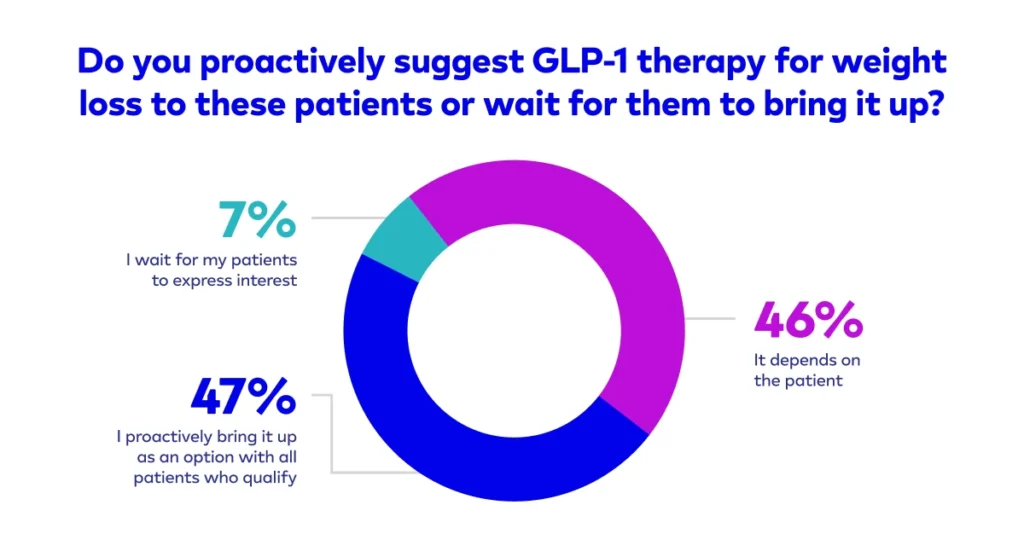
Physicians in the study are divided on whether prescribing compounded semaglutide medications is the answer to drug shortages and high costs:2
- 38% have prescribed compounded GLP-1 medication to a patient before
- 34% don’t believe compounded GLP-1s are a viable option
- 19% have not yet prescribed GLP-1s but are considering it.
As noted, half of surveyed consumers expect to use weight-loss medications for a year or less. However, most physicians take a personalized approach to determining the duration of GLP-1 therapy. Here’s what they had to say:2
Regarding barriers to patient adoption, 89% of physicians in our survey identify insurance coverage and cost as major obstacles to GLP-1 therapy, and 17% cite the challenge of keeping up with routine doctor appointments.2 Despite these barriers, most physicians believe that up to 74% of their patients could benefit from weight loss.2 In fact, 86% of physicians offer general lifestyle and weight-management advice to patients on GLP-1 therapy, and 53% anticipate GLP-1s will become a standard treatment for obesity in 1 to 3 years.
While GLP-1s present significant opportunities for pharmaceutical companies, they also impact service lines across health systems. Health systems should educate patients about the necessity of long-term or potentially lifelong GLP-1 use to prevent weight regain and maintain health benefits. Clear communication about the expected duration of GLP-1 therapy is crucial, as many consumers currently have unrealistic expectations.
Implications of GLP-1s for Health Systems
With the surge in interest in weight loss management, hospitals are seeing increased demand for nonsurgical weight loss programs. For example, Laura Davisson, MD, the director of WVU Medicine’s medical weight management program, reports that the program for employees and their dependents is expanding from 96 to 250 participants. Additionally, GLP-1 medications, such as Ozempic and Wegovy, improve eligibility for surgeries and transplants by helping patients meet strict body mass index cutoffs. In some health systems, endocrinologists leverage GLP-1s to help patients lose weight and increase their chances of qualifying for kidney transplants.
As GLP-1s gain popularity, health systems should prepare for the impact on their services and focus on service lines that could benefit, such as cardiology and endocrinology. Increasing marketing efforts to attract qualified patients and integrating weight-related treatments into a wider array of services is important. In addition, enhancing coordination between departments will be crucial for delivering comprehensive patient care and aligning team objectives.
In addition to these adjustments, experts predict that the rise in weight loss drugs could increase demand for orthopedic care. Higher activity levels among individuals who lose weight may result in more sports injuries, musculoskeletal issues, and arthritis-related conditions, potentially raising surgical volumes. Conversely, the rise of obesity medications could reduce the need for bariatric surgeries by 2033, affecting health systems that rely on revenue from elective surgeries.
GLP-1s’ potential applications are expanding beyond weight loss. Some analysts predict FDA approval of GLP-1s for sleep apnea, while ongoing research explores their effectiveness for conditions like kidney disease, Alzheimer’s, and even heart disease. Some hospitals might increasingly incorporate semaglutides into preventive cardiology strategies to reduce cardiovascular events through medication rather than surgery.
To navigate these evolving trends, health systems should continuously monitor developments and patient experiences. For example, in collaboration with Sanford Health, Sharp HealthCare, and Texas Health Resources, tech startup Dandelion Health has launched a GLP-1 data library that sources data from more than 10 million patients of diverse backgrounds. This extensive dataset enables health systems to proactively refine their practices and decision-making processes for improved patient care.
For health systems looking to leverage the benefits of GLP-1 therapy, consider using Healthgrades to enhance visibility and establish your brand among prospective patients.
Promote Your Health System’s Services with Healthgrades
With Healthgrades’ innovative solutions, you can enhance patient access, engagement, and care coordination and pave the way for lasting connections between consumers, doctors, and your brand.
Our Advertising Solutions connect your brand with the largest online audience of motivated healthcare shoppers. In fact, two-thirds of visitors to Healthgrades physician profiles schedule an appointment within a week. As our partner, you can tap into this high-value patient pool and drive appointments for your most profitable service lines with guaranteed conversions. Here are some key features that help make that happen:
- Increased visibility: Highlight your health system with prominent branding and calls to action on Healthgrades and our partner sites Sharecare, Healthline, and Medical News Today.
- Competitive intercept: Promote your brand and present your medical staff as alternative options directly on your competitors’ profiles.
- Better relevancy in search results. We complement your SEO and SEM strategies to maximize your relevance in search results and provide qualified leads.
Healthgrades Brand Solutions elevate your health system’s brand to reach a highly targeted audience across media platforms. Our customized media plans align with your marketing strategy and leverage Healthgrades Audience Intelligence to identify the consumers most likely to make appointments soon. These solutions are highly targeted—for instance, helping you identify and reach your ideal audience for weight loss services. Maximize your branding investment through PatientConnect’s hyper-targeted display advertising on healthgrades.com and PatienTarget’s strategic omnichannel advertising across web, video, connected TV, and audio platforms.
Once you’ve captured your audience’s attention, transform it into action with Medchat·ai for Health Systems and Practices. Our Automation Solutions streamline the patient journey within your health system, including managing frequent follow-up appointments for those on GLP-1 medications. Medchat·ai delivers seamless patient communications and automates workflow processes across all facets of care. From handling common inquiries and scheduling triage to managing specialty pharmacy enrollment and ongoing care, this fully customizable, HIPAA- and SOC 2-compliant platform overcomes organizational bottlenecks, freeing your team to focus on patient care while boosting retention and satisfaction.
Whatever your health system goals are, exceed them with Healthgrades. Chat with us to get started.