
Oct 22, 2025
|Blog
Nicole Fufaro of Universal Health Services on Personalization, Digital Innovation, and Earning Patient Loyalty
Voices in Health Leadership is a series spotlighting healthcare leaders reimagining access, experience, and innovation in a rapidly evolving landscape. Through candid conversations, we explore the real-world stories, strategies, and leadership insights shaping the future of care delivery.
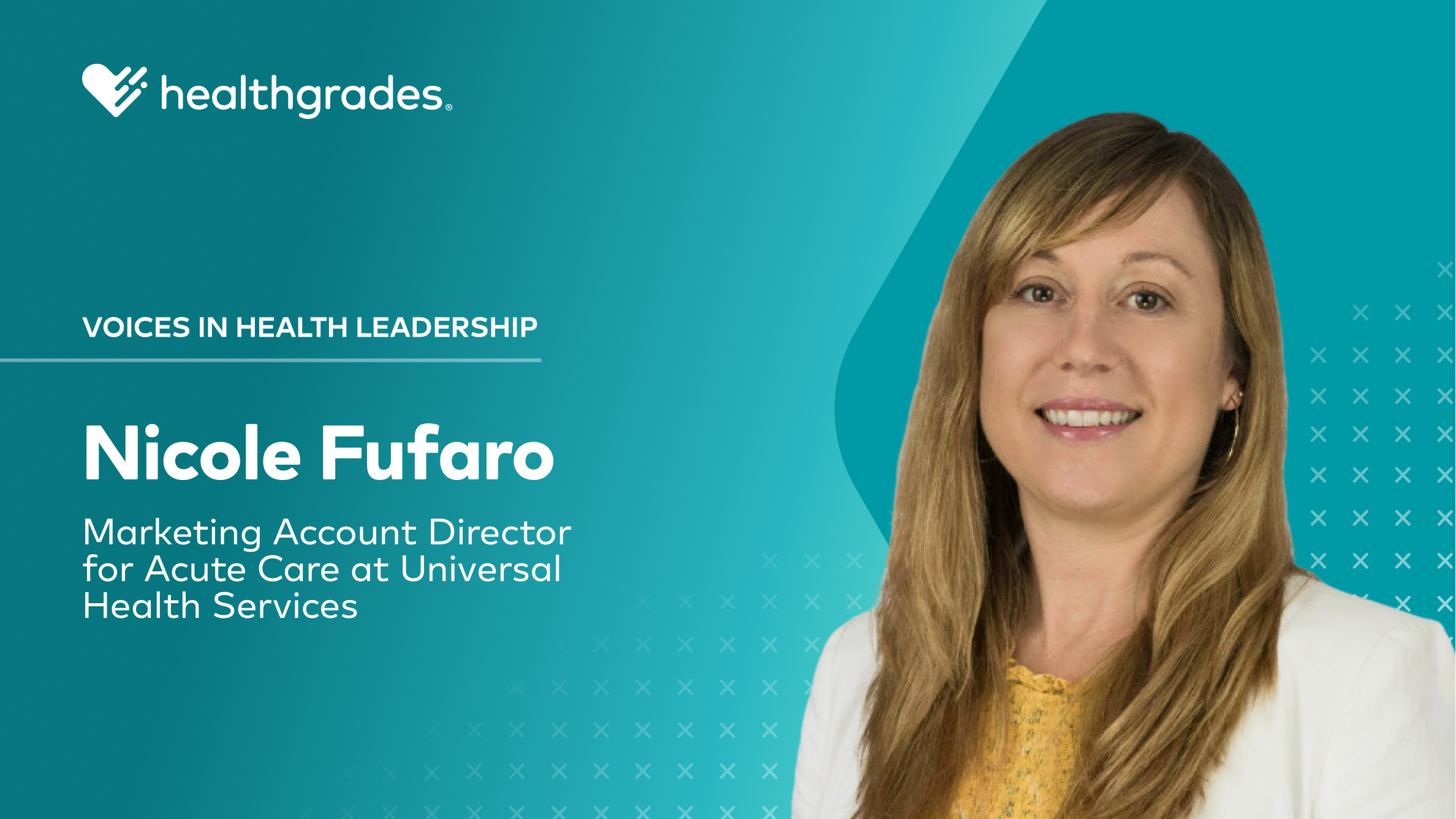
Healthgrades’ Audrey Keller sat down with Nicole Fufaro, Marketing Account Director at Universal Health Services, to discuss how personalized care, digital innovation, and cross-functional collaboration shape the modern patient experience and strengthen community trust.
Can you introduce yourself and tell me about your role at UHS? I’m also curious to hear what first led you into healthcare.
My name is Nicole Fufaro, and I’m the Acute Care Marketing Account Director at Universal Health Services. UHS is unique in that we have an in-house marketing department that supports our hospitals’ marketing, advertising, PR, and communications. We have full Agency of Record (AOR) capabilities. I help serve as a liaison between our local marketing teams across the acute care division and our agency teams.
As for what drew me to healthcare, it was serendipitous. I studied marketing in school, then, early in my career, I was given an opportunity to experience the passion that comes with healthcare advertising and marketing, which drew me in. Being able to have a direct or even indirect connection to helping patients and connecting them with high-quality care feels meaningful, and I get to experience that every day.
Personally, I have a son who has special needs, so I navigate the healthcare landscape daily. That perspective not only influences my work but also fuels my passion to continue working in this space, portraying healthcare in a positive light and helping people understand the access and availability of high quality care, no matter where they are.
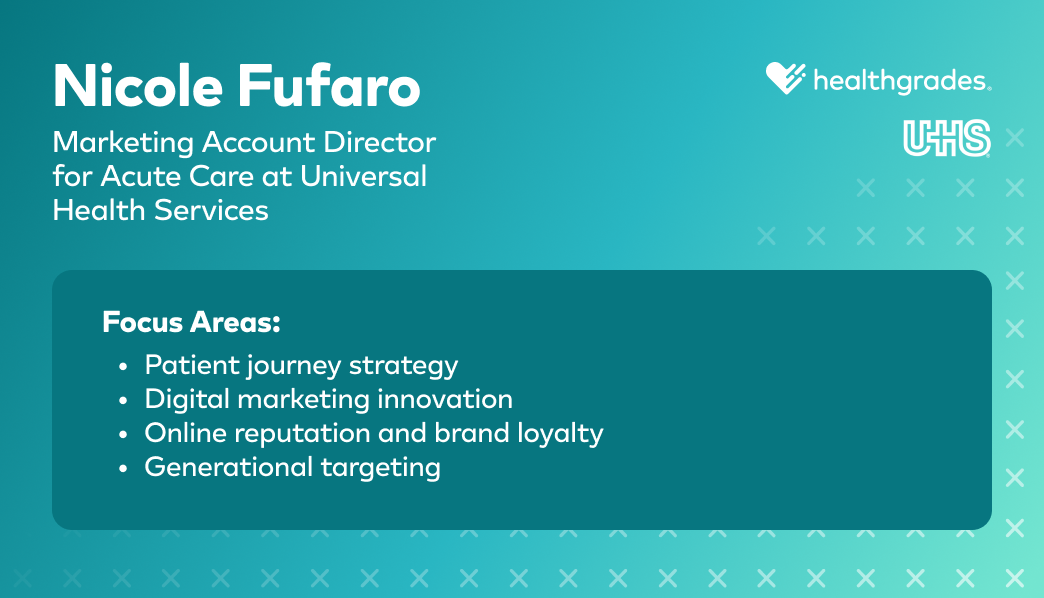
How do you ensure that every stage of the patient experience, from discovery through follow-up care, feels seamless, supportive, and personalized?
We aim to support patients at every stage of their journey. That begins with the consideration phase, when someone starts feeling unwell or is researching symptoms and looking for answers. It continues through their care experience and into follow-up, where we nurture the relationship and encourage long-term trust and return visits.
We support that journey across all of our available channels. That includes providing disease-specific and procedural information through our website’s service line pages, blog content, and social media. At each point, we offer educational and online resources and patient tools, such as our mobile app that helps patients navigate their care.
Toward the end of their care experience, we stay engaged through touchpoints like email and other nurturing efforts. We invite feedback through patient surveys and review requests, which let us understand how we’re doing while also informing service recovery efforts and even influencing operational improvements. Whether someone shares a positive or negative experience, we view it as a learning opportunity.
Positive feedback helps us recognize and repeat what’s working well and ensures staff understand the impact of those moments. If feedback is negative, our online reputation team can step in to address concerns, resolve issues, and create a better experience moving forward. Hopefully, those patients feel confident returning to us in the future.
Positive feedback helps us recognize and repeat what’s working well and ensures staff understand the impact of those moments. If feedback is negative, our online reputation team can step in to address concerns, resolve issues, and create a better experience moving forward. Hopefully, those patients feel confident returning to us in the future.
Nicole Fufaro, Marketing Account Director for Acute Care, Universal Health Services
Is there an internal feedback loop across teams that helps you better understand and improve the patient journey?
One of the really great things about UHS is the strong collaboration between our Information Services (IS) and Marketing teams. In particular, our digital group collaborates quite frequently, and our IS team has a pretty significant roadmap when it comes to tools and resources. For example, they’re focused on optimizing remote preregistration, whether through our mobile app or other online platforms, so people can prepare for their visit ahead of time and be triaged quickly to get directly to their care team.
Then, it becomes a matter of how we roll that into our digital strategy. Because of this strong collaboration across teams and tools, we share data with each other. That means when IS pilots a new tool or feature, Marketing is involved from the start, helping to communicate those tools to patients, monitor engagement, and optimize the experience afterward. That data-sharing allows us to really understand what’s working and what’s not. Pilot programs also allow us to make sure that if something doesn’t have the expected impact, we can pivot. From a Marketing perspective, our team can then support those tools with broader strategies, making sure patients are aware of how these resources set us apart.
We often launch broad patient experience and resource campaigns to remind people that tools like our mobile app are available. With the app, patients can book appointments, research care options, find access points, and more. On the inpatient side, IS also guides us in promoting things like preregistration tools, bedside apps, our patient portal, and other features that support everything from care navigation to payment compliance. All of this helps us understand, at a broader level, how our tools influence the patient experience, how they set us apart from competitors, and how we can bring those strengths forward in our advertising and communications.
These days, patients have more options than ever. What do you believe truly sets UHS apart and keeps them coming back?
One thing I align with strongly at UHS is our commitment to personalized, individualized care. The idea that shaped our organization from the beginning came from our founder, who set out to serve markets that lacked access to care with the goal of bringing really high-quality care to these communities. Many of our acute care markets are in more remote areas where competitors may not have a strong presence.
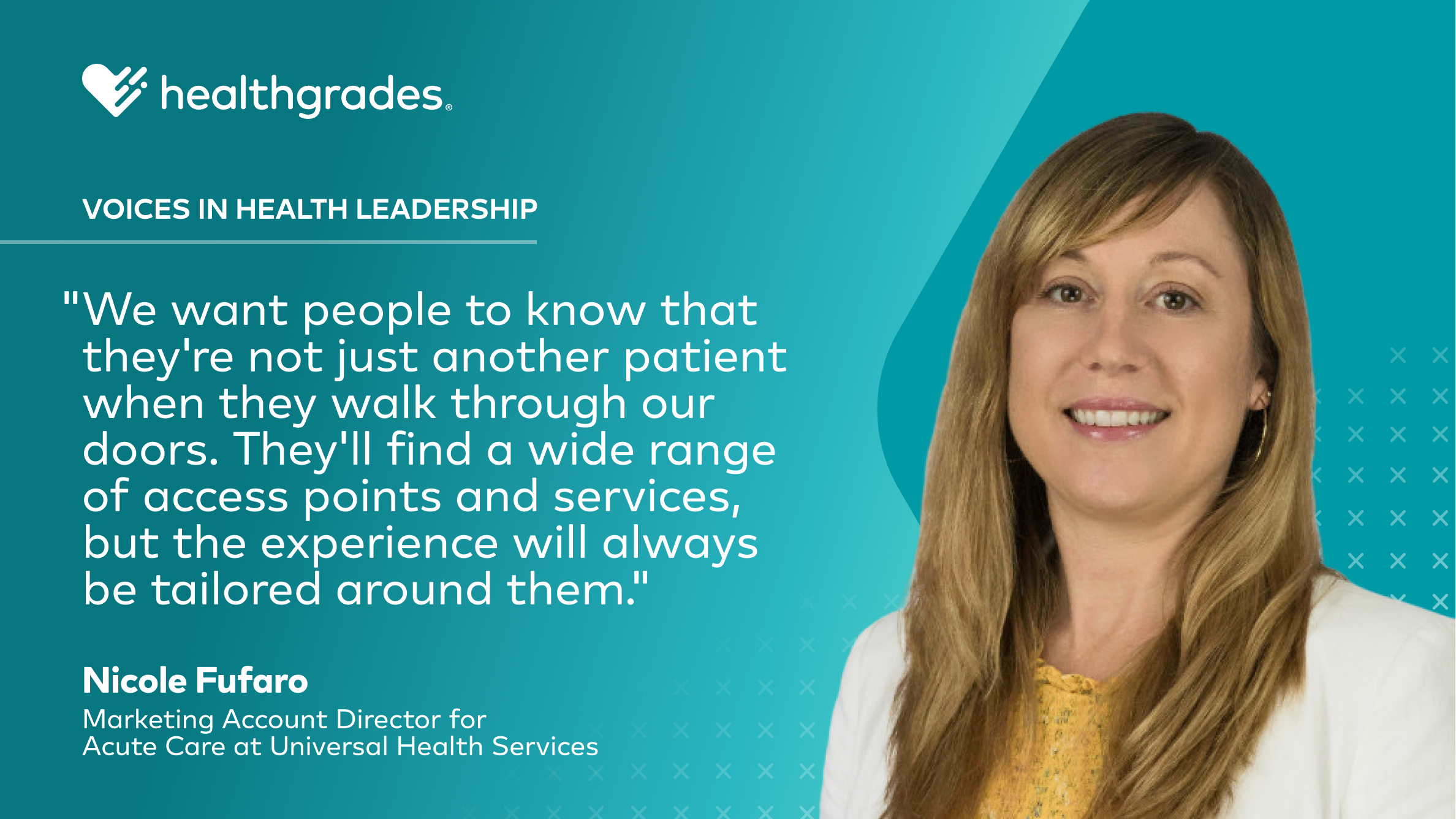
Naturally, that is starting to shift. Our company is 46 years old now, and as these communities grow, we are seeing more competition move into our space. However, our model has not changed. We remain fully entrenched in our community. What helps us stand apart from larger competitors is our deep commitment to keeping care personal and community-centered. We want people to know that they are not just another patient when they walk through our doors. They’ll find a wide range of access points and services, but the experience will always be tailored around them. They are at the center of everything we do.
One thing I align with strongly at UHS is our commitment to personalized, individualized care. The idea that shaped our organization from the beginning came from our founder, who set out to serve markets that lacked access to care with the goal of bringing really high quality care to these communities... Our company is 46 years old now, and as these communities grow, we are seeing more competition move into our space. However, our model has not changed.
Nicole Fufaro, Marketing Account Director for Acute Care, Universal Health Services, Inc.
It’s a beautiful model. I feel lucky to witness it firsthand, especially as our teams bring it to life and share those stories on social media. This approach is woven into everything we do and discussed at every event we’re part of. It’s a core principle at UHS, and one that I’m genuinely proud of.
What can healthcare organizations learn from other industries about strengthening brand loyalty and deepening patient relationships?
We’re seeing a significant generational shift. There’s a big difference in how Boomers, Gen X, Millennials, and Gen Z search for information. It used to be, “Well, my doctor referred me to this location or specialist,” and that was the deciding factor. But for younger generations, that’s no longer enough. People are researching on their own, learning about their conditions, and making independent decisions about their care, often virtually or outside of a traditional referral.
Younger generations are also heavily influenced by peer perceptions. Online reviews and patient feedback play a huge role in their decision making. That behavior has long shaped strategy in other industries, and we’re at a point where it is becoming just as critical for us in healthcare.
With the rise of platforms like TikTok and the growing volume of health-related content, healthcare organizations have a lot to navigate. How is UHS thinking about these emerging channels?
Thinking about where opportunities might lead is exciting. At UHS, we’ve had a couple of chances to hear from industry experts about generational behavior patterns and how healthcare is evolving to meet the expectations of younger audiences. Not only are digital channels being embraced and prioritized, but there’s also a growing understanding that the operational way we engage with people is changing. From telehealth to self-diagnosis, people are managing their health differently.
We’re exploring new ways to initiate engagement with people and then responsibly transition them into care, helping them understand their options and hopefully converting that interaction into a meaningful patient relationship.
Within our acute care division, we’re actively working across various markets on tools like online health risk assessments. These allow people to conduct a basic self-assessment related to a potential condition. But we’re being very intentional and responsible in how we follow up. Those assessments create leads, and we’re directing them to a service line expert who can answer more detailed questions and help guide them to the right next step.
Before we wrap up, is there anything else you’d like to share about UHS or highlight from your work that we haven’t covered?
Patient experience is now part of every conversation we’re having, and I think that’s really critical.
It goes back to how we represent ourselves to the public. We often talk about how much we prioritize each individual patient who walks through our doors. We have a variety of programs being developed at the operational level that will help us deliver on that, whether that’s safety initiatives or patient experience programs like leadership rounding and nurse rounding. As those programs mature, we bring them into public view through blog articles, social media, and newsletters, so people can see that it’s not just something we say. These are real actions being taken by UHS to improve the patient experience.
I also think our online reputation is really strong across the division, and we have clear evidence of the success of these efforts. That’s something we’re very proud of and are promoting widely. As marketers, we’ll have the opportunity to leverage that through testimonials and other ways we can showcase the success of these efforts.
About Universal Health Services, Inc. (UHS)
Universal Health Services, Inc. (UHS) is one of the largest and most respected healthcare organizations in the nation, with approximately 99,000 employees dedicated to improving lives and advancing how care is delivered. Known for its high-quality, community-focused approach, UHS operates 29 acute care hospitals, 331 inpatient behavioral health facilities, 33 freestanding emergency departments, and 27 outpatient and ambulatory care centers across 39 U.S. states, Washington, D.C., Puerto Rico, and the United Kingdom. From small towns to major cities, UHS is committed to making compassionate, personalized care accessible to the people and communities who need it most.
Looking to improve digital access and patient engagement at your health system? Get in touch with us today to learn how Healthgrades can help you connect with the right patients at the right time—the moment they’re ready to book an appointment.