
Case Study
Case Study: Building Robust Profiles, Cultivating Reviews, and Driving Growth with Healthgrades

Discover how a Southeastern health system combined complete physician profiles, authentic patient feedback, and Healthgrades Advertising Solutions to stand out online, attract patients, and drive measurable growth.
Overview
Today’s healthcare consumers expect a seamless, retail-like experience when searching for care online. They want clear, comprehensive information about physicians, including photos, bios, and even introductory videos, before deciding to make an appointment. Verified reviews from other patients also play a crucial role, helping them make confident, informed choices about their care.
However, it’s not just patients who value this information. Referring physicians also look for complete, credible profiles and verified patient testimonials that inspire confidence when recommending a specialist or health system.
Learn how a not-for-profit health system in the Southeastern U.S. improved its physician profiles, built a strong base of patient reviews, and partnered with Healthgrades to expand reach and make a stronger impression.
The Challenge
The health system, operating with a small but resourceful team, needed to find ways to stand out in a competitive market. With limited resources and no listing management software, the team was intentional about staying ahead of trends, making strategic choices, and proactively countering competitive forces.
For this health system, the challenge was building trust and visibility while clearly differentiating itself from competitors.
The Solution
The Web & Digital Management team invested in a three-pronged strategy:
Building Stronger Connections With Robust Profiles
Patients increasingly use online signals to narrow their options and decide where to book. In a Healthgrades survey, 76% of people said a positive online reputation influenced their decision to choose one physician over another.
To strengthen digital first impressions and support patient decision-making, the health system dedicated time and resources to creating robust HCP profiles. Photos, bios, and introductory videos were added to give patients and referring physicians more personal and engaging insights.
This investment reinforced the health system’s credibility and visibility. It also laid the foundation for measurable success in high-value service lines.
Ratings and Reviews: Harnessing Patient Voices
Patient testimonials became a cornerstone of the health system’s digital strategy. By regularly prompting patients to share feedback, the team built a strong base of reviews across multiple platforms. Their focus on patient perspectives reflects a broader industry trend:
- Over 90% of patients consult reviews when searching for a doctor.
- 19% of physicians list patient feedback as the most important factor when making referrals.
By prioritizing reviews, the health system also improved search visibility and positioned itself for success in an era of AI-powered searches. Algorithms favor pages that offer thorough and reliable information. Through a steady flow of authentic patient ratings across Healthgrades, Google, and other third-party websites, the health system ensured its doctors consistently ranked at the top of “Best [specialty] doctor in [city]” queries.
Leveraging Healthgrades Advertising Solutions
Despite operating with a small team, the health system achieved strong results by staying strategic and embracing the right partnerships. By working with Healthgrades, the organization connected with the largest audience of high-intent, commercially insured consumers searching for care.
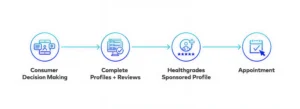
Since 2018, the team has invested in Healthgrades Sponsored Profiles to appear first in healthgrades.com search results and doctor profile pages, attract consumers when they are actively searching for care, and drive appointments for their priority service lines—including Orthopedics, Neuro/Spine, and Cardiology. Here’s how:
- Increased visibility: Prominent branding and calls to action on healthgrades.com physician search results pages and profiles ensure they are seen when patients are choosing care.
- Syndication network: Campaigns are syndicated across Healthgrades’ partner sites, including Healthline, Sharecare, and Medical News Today.
- Easy conversion: Frictionless online scheduling for in-person and telehealth services allows patients to book instantly. In fact, two-thirds of consumers who visit Healthgrades physician pages make an appointment within a week.
- Competitive intercept: The health system’s physicians are featured as alternatives on competitors’ profiles, redirecting appointment opportunities at key decision moments.

Real Results and a Strong Return on Investment
The success of the Sponsored Profiles program is measured by patient conversions, tracked via phone calls made from a unique phone number on healthgrades.com. Those interactions translate into real appointments and measurable business value.
The client’s program was launched in January 2024 and reached break-even in just its second month.
Although the health system does not share financial encounter data, the Healthgrades team was able to conduct a Proxy ROI analysis based on the health system’s conversion volume delivered over 24 months, from January 2024 to December 2025, combined with Healthgrades’ Cross-Client Average performance metrics.
Over the 24-month period, New-to-System Patients generated over $8M in revenue, resulting in a program ROI of 7.1:1.
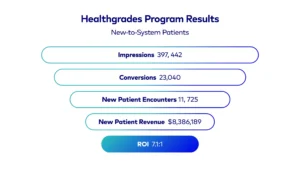
In addition, New-to-Service Line Patients accounted for $7,612,351 in additional revenue over the same period.
Combined, the Sponsored Profiles program generated nearly $16M in total revenue from New-to-System and New-to-Service Line patients.
Stand Out and Grow With Healthgrades
Health systems need smart, scalable strategies to differentiate themselves. This Southeastern organization proves that with a smart approach, even a lean team can significantly strengthen its reputation, win new patients, and build long-term momentum. Ready to reach patients at the right moment? Partner with Healthgrades to connect with high-intent consumers and accelerate growth.
Proxy ROI Methodology
- The Proxy ROI analysis is based on the health system’s conversion volume delivered over 24 months, combined with Healthgrades’ Cross-Client Average performance metrics. Provider Count (Daily Average): 272.
- Cross-Client completion metrics are used to forecast downstream encounter volume up to 24 months post-call (i.e., the percentage of calls expected to convert to encounters and the distribution of those encounters by month).
- The Total Call-to-Encounter rate used observed downstream utilization rates from our long history of measuring ROI for clients that have provided data, with patient visits tracked for 24 months post-conversion.
- Patient types are defined as:
- New-to-System Patients are defined as those who have had no encounter at any location in the system within 24 months prior to placing their first program call.
- New to Service Line Patients are defined as those who have had no encounter at any location in the system for a given service within 24 months prior to placing their first program call.
- Existing Patients are individuals who have a history of utilizing the health system within 24 months of their program conversion.
- Patient Revenue, or Contribution Margin, is defined as Total Payments received for services rendered minus the direct cost of providing care.
Please note: When partners provide encounter data, a more robust report demonstrating actual measured downstream value for all patient types would replace the Proxy ROI report. Details such as actual contribution margin, payor mix, service-category utilization, service-entry point, and retention results would be provided.