Record hospital closures since the start of the pandemic have significantly accelerated the spread of healthcare deserts across the country, leaving a growing number of Americans without access to essential health services. These closures have been particularly detrimental to rural communities, where patients must travel long distances to access critical emergency and inpatient services, thereby elevating their risk of a negative outcome. Studies show that patients facing transportation barriers are more likely to experience complications from delayed or deferred care, underscoring the importance of local care options.
Both the prevalence of healthcare deserts and the outsized effect of hospital loss on rural communities have been extensively documented. However, existing research has yet to account for growing variation in the quality of care across hospitals–even among facilities in the same town. With care variability on the rise, proximity to care is no longer sufficient; to maximize their chances of a positive outcome, patients must live near a hospital recognized for its high-quality care.
Our Findings
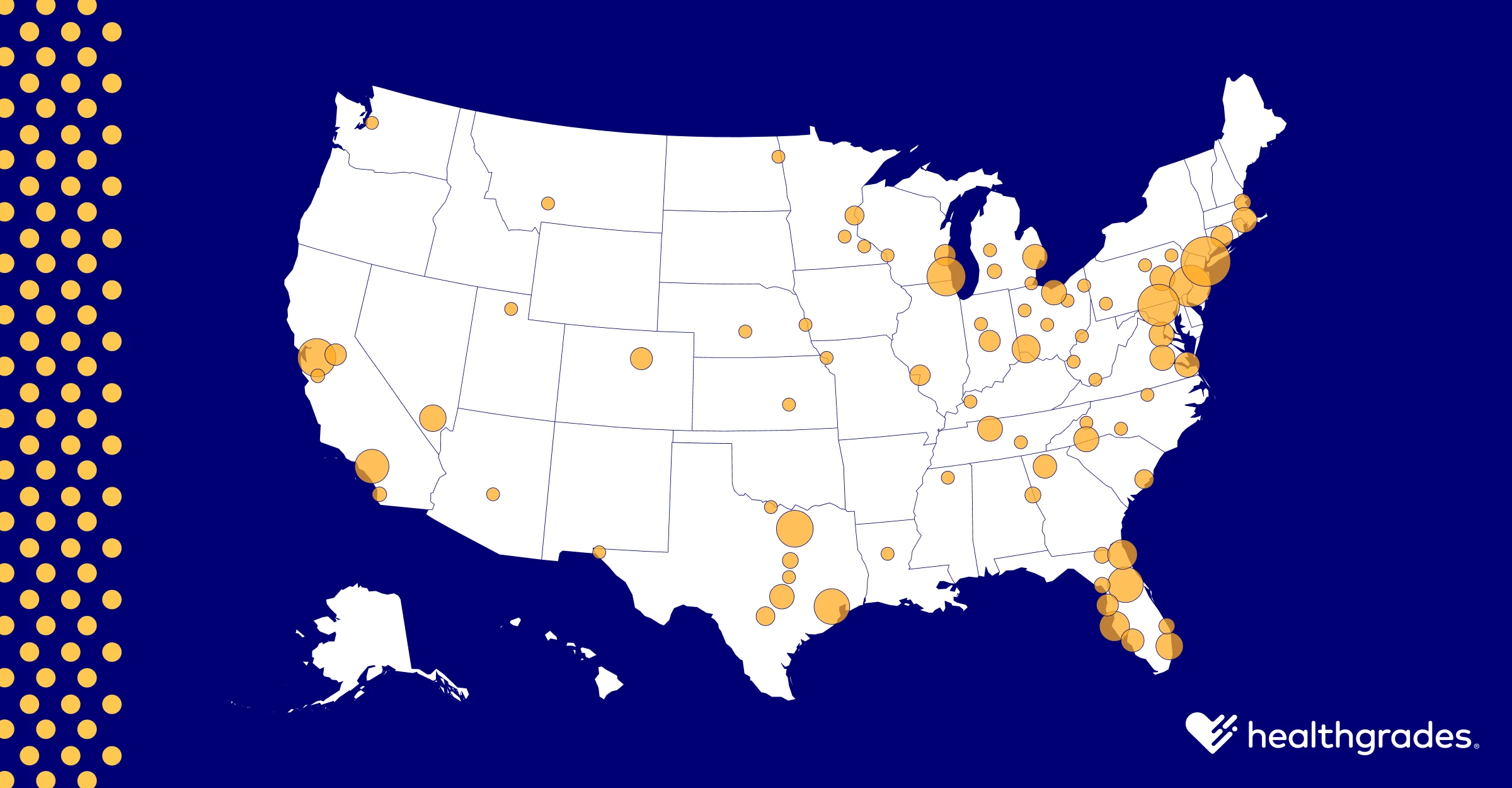
Quality matters when it comes to choosing a hospital. Still, nearly half (46%) of Americans lack convenient access to a hospital that delivers consistently high-quality care, living more than 25 miles away from one of America’s 250 Best Hospitals. Significant travel challenges remain even when considering hospitals beyond the top 250: Healthgrades found that one-third of patients face difficulties reaching the top 20% of U.S. hospitals.
Additional disparities are evident at the state level, with 30 million Americans living in states without one of America’s 250 Best Hospitals. And while lack of access to high quality care impacts communities from coast to coast, Healthgrades found that residents in rural states at the center of the country–including Idaho, Iowa, Oklahoma, and Arkansas–remain disproportionately affected.
Patients living in major cities like Tulsa, Buffalo, and New Orleans also face an undue travel burden, as residents must travel more than 100 miles to reach top-tier hospitals. It’s important to note that while some metro areas may not be home to one of America’s 250 Best, they may still offer top-rated facilities for specialty care. For example, although residents in Fresno may not have convenient access to one of America’s 250 Best Hospitals, Saint Agnes’ and Community Regional Medical Center’s nationally recognized outcomes have made the city a premier destination for spine surgery.
Visualizing America’s Quality Care Deserts

What High-Quality Care Deserts Mean for Your Marketing Strategy
As a marketer at an award-winning facility that neighbors a high-quality care desert, you have a unique opportunity to position your organization as a regional destination for care by expanding your marketing efforts to engage consumers in these areas. Leverage your reputation for top-rated care through targeted awareness campaigns that attract consumers willing to travel for the very best. Prominently showcase your Healthgrades awards through strategically placed billboards, media partnerships, and digital ad campaigns to remind these quality-conscious consumers that exceptional care is worth the commute.
In addition, promote your telehealth and flexible care options in your expanded campaign efforts. Bringing awareness to these services engages consumers who cannot make the physical journey to your facility and reaffirms your organization’s commitment to breaking down barriers to care.
About Our Data
Healthgrades analyzed risk-adjusted mortality and complication rates at approximately 4,500 hospitals nationwide to determine America’s 250 Best Hospitals. These hospitals are defined as those offering consistently high quality care. Employing the same methods used to identify America’s 250 Best Hospitals, Healthgrades expanded the list of 250 hospitals to include nearly 900 hospitals, representing the top 20% of U.S. hospitals.
Then, using 2020 US census data, Healthgrades identified zip codes 25 miles or more from the nearest America’s 250 Best Hospital. This distance was selected based on research indicating that drives longer than 30 minutes constitute a healthcare travel barrier. Patients residing in these communities face a significant travel burden (25 miles or more) when seeking care from their nearest America’s 250 Best Hospital. Healthgrades then identified zip codes that were 25 miles or more from the top 20% of U.S. hospitals. Convenient access to high-quality care is defined as living less than 25 miles from one of America’s 250 Best Hospitals.
To learn more about how Healthgrades rates hospitals, read our full methodology or see our patient-friendly infographic overviewing our award determination process.
*Statistical average based on Healthgrades’ analysis of 2022-2024 MedPAR data and represents three-year estimates for Medicare patients only.