
Four years on, pandemic-driven challenges continue to place an enormous strain on the nation’s healthcare system. Unprecedented cost increases jeopardize day-to-day operations and undermine organizations’ efforts to achieve financial stability.
The 2025 Healthgrades Specialty Excellence Report overviews the challenges hospitals face on the road to economic recovery, site-of-care shifts, and growth opportunities for organizations working to offset pandemic-driven revenue losses.
Healthgrades published this report with the release of the 2025 Specialty Excellence Awards and Ratings and the 2025 Specialty State Rankings. These achievements recognize hospitals that deliver consistently better-than-expected outcomes across 31 common procedures and conditions. For its 2025 analysis, Healthgrades analyzed risk-adjusted complication and mortality rates at approximately 4,500 U.S. hospitals to identify the state and national leaders in specialty care. Healthgrades’ 2025 recognitions for excellence in inpatient specialty care include state rankings, five-star ratings, and three national awards:
- Healthgrades Specialty Excellence Award™ – the top 10% of hospitals nationwide in 16 specialties
- Healthgrades America’s 100 Best Hospitals Award™ – the top 100 hospitals nationwide in 11 specialties
- Healthgrades America’s 50 Best Hospitals Award™ – the highest achievement Healthgrades offers for inpatient specialty care recognizes the top 50 hospitals nationwide in three specialties
- Healthgrades Specialty State Rankings™ – the top three or top five hospitals in 30+ eligible states across 18 specialties1
Alongside these inpatient achievements, Healthgrades announced the recipients of the 2025 Outpatient Awards, which recognize the top 10% of hospitals nationwide in three rapidly growing service areas:
- Healthgrades Outpatient Joint Replacement Excellence Award™
- Healthgrades Outpatient Orthopedic Surgery Excellence Award™
- (New for 2025) Healthgrades Outpatient Prostate Care Excellence Award™
Hospital quality is one of the most important but often overlooked factors for patients to consider during their care search. When searching for specialty care, consumers must pick a hospital with top ratings for their condition or procedure to maximize their likelihood of a successful outcome. A hospital with quality achievements in cranial neurosurgery might deliver worse-than-expected outcomes in cardiac care, which is why it is imperative that consumers look beyond convenience and choose a hospital that excels in the specialty they need.
Consumers can find resources on how to find a specialist and more through Healthgrades’ Patient Advocacy Center.
Healthgrades Fall Ratings & Consumer Survey Insights
Access to outcomes-based hospital performance indicators has never been more valuable to U.S. healthcare shoppers, most of whom are more concerned with their quality of care than they were before the pandemic.2 This pandemic-driven interest in quality continues to shape healthcare decisions, with third-party quality awards playing an increasingly influential role in the consumer care search. According to a recent Healthgrades consumer survey:
- 80% of Americans report feeling more confident in their decision to seek care at a hospital with a quality award in their procedure or condition.3
- Over 75% say they would only choose a hospital with high quality ratings in their condition or procedure, and one-third identify quality awards as one of their top three criteria for choosing a hospital.3
- When choosing between two hospitals for an upcoming procedure, nearly two-thirds say they are more likely to pick a hospital with a third-party quality award over one without one.3
Patients seeking care at a hospital with specialty care distinctions from Healthgrades should feel confident that they are maximizing their chance of a positive outcome. According to Healthgrades’ specialty care analysis:
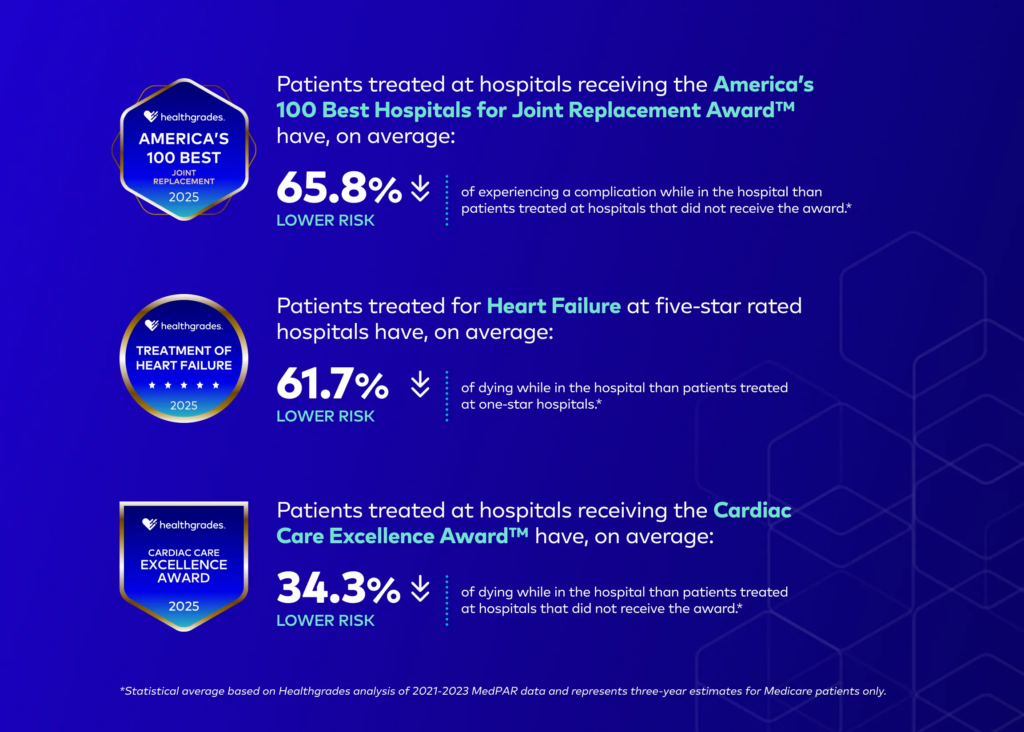
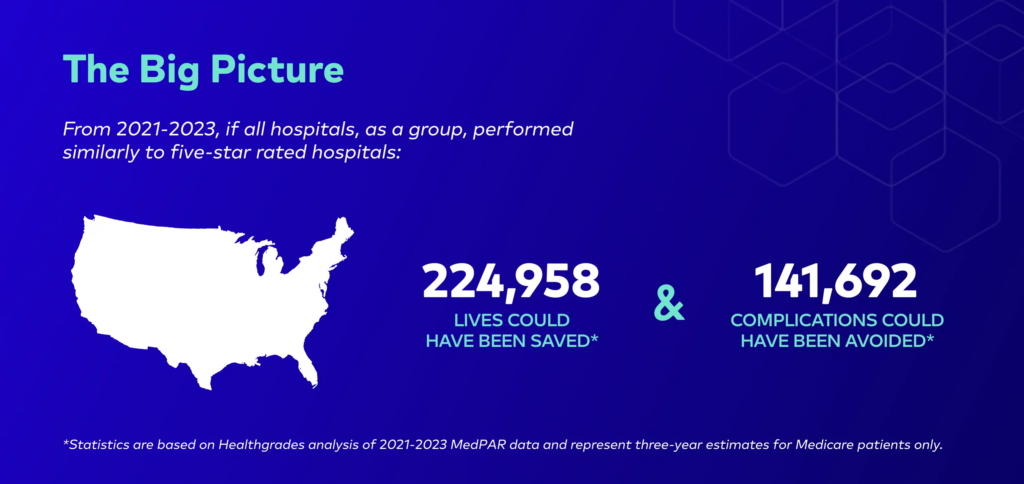
While it is important to recognize and celebrate this year’s award recipients, our analysis highlights persistent, growing disparities in hospital performance at every level. These findings speak to the importance of helping consumers identify the best care solutions for their needs and informing hospitals about their clinical strengths, weaknesses, and opportunities to improve. Both aspects are vital to improving patient outcomes, particularly as the performance gap between the nation’s five- and one-star hospitals widens.
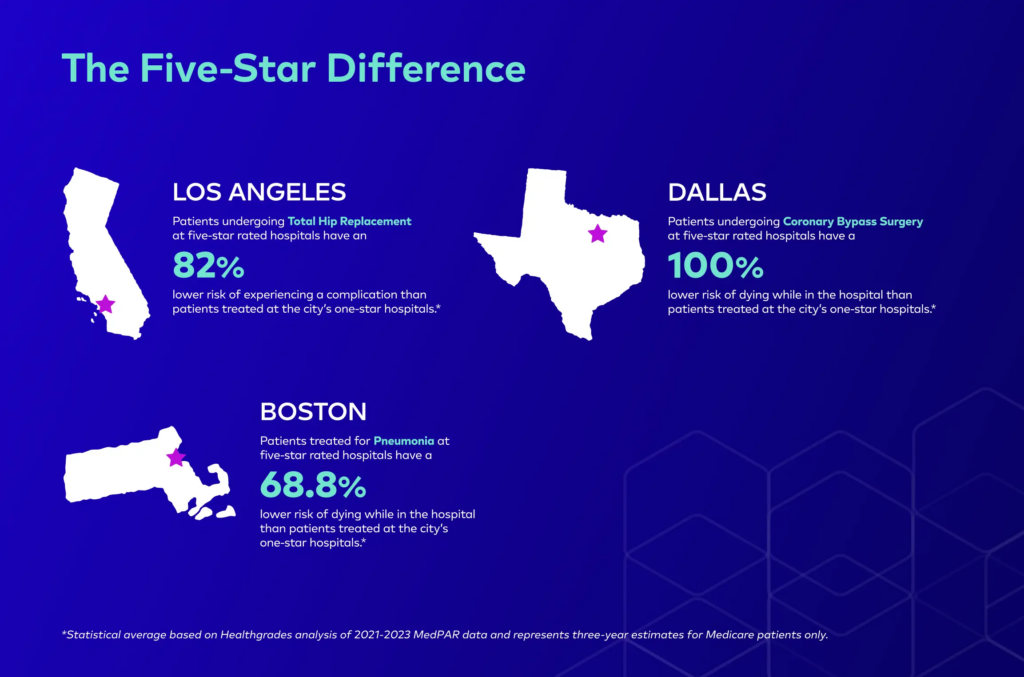
In addition to national disparities in clinical quality, Healthgrades’ specialty care analysis revealed substantial variations in outcomes among hospitals within the same city.
Financial Stability Remains Elusive
After a strong close to 2023, the industry reported a solid financial performance for the first half of this year. Patient volumes have returned to their pre-pandemic levels, and revenue per patient day has outpaced expense growth since the beginning of the year, according to Kaufman Hall’s latest National Hospital Flash Report. Another cause for optimism is a recent decline in average length of stay (ALOS), which indicates reductions in severe patient acuity and improved patient flows.
While volume-adjusted expense growth has slowed, overall expenditures remain higher than they were before COVID-19. These higher expenses are mainly driven by high labor costs, which accounted for over 80% of total Q2 expenses. Although reliance on high cost contract labor is down, many hospitals still rely on temporary labor sources to fill critical workforce gaps.
These improvements are promising signs of economic rebound after years of unprecedented financial headwinds, but there is evidence that relief has not been evenly distributed. In the first half of 2024, the industry maintained a 4.1% operating margin YTD with month-over-month median increases. This period also saw declines in median change, with around two-thirds of the nation’s hospitals reporting no change in operating margins since 2019. This trend suggests that most of these national improvements are fueled by a minority of extremely well-resourced organizations, while the rest of the industry struggles to catch up.
Disparate spending priorities between small and large facilities further support this theory. A January 2024 survey found that while most of the industry’s anticipated capital expenditures for this year went toward maintaining and improving existing facilities, health systems with six or more hospitals prioritized the construction of new inpatient and outpatient facilities.
What Uneven Recovery Means for Care
Opportunities to recoup pandemic-driven economic losses are almost exclusively reserved for large, well-resourced health systems. Disparities in economic recovery across healthcare providers have serious implications for the industry’s financial stability and the nation’s health.
The recent rise in M&A activity exemplifies how uneven economic recovery can exacerbate existing disparities in care access. Larger health systems increase their market share by acquiring smaller hospitals that would otherwise face closure. The benefits are clear: the parent organization gains access to new revenue streams while the smaller facility is able to maintain its services. The problem arises when independent facilities in under-resourced communities cannot compete with larger networks and are forced to close. Consolidations have hit rural communities especially hard over the last few years, worsening existing care deserts and putting more pressure on remaining providers.
Site-of-Care Shifts
Although inpatient and outpatient volumes have rebounded, most hospitals have experienced flat or declining margins. Inflated drug and supply costs, discharge delays, and inadequate reimbursements have all driven up the cost of care. At the same time, outpatient migration captures revenue from profitable inpatient service lines, such as joint replacement and prostate care.
Outpatient migration has been years in the making, but pandemic-induced pressures have caused outpatient volumes to skyrocket since 2020.
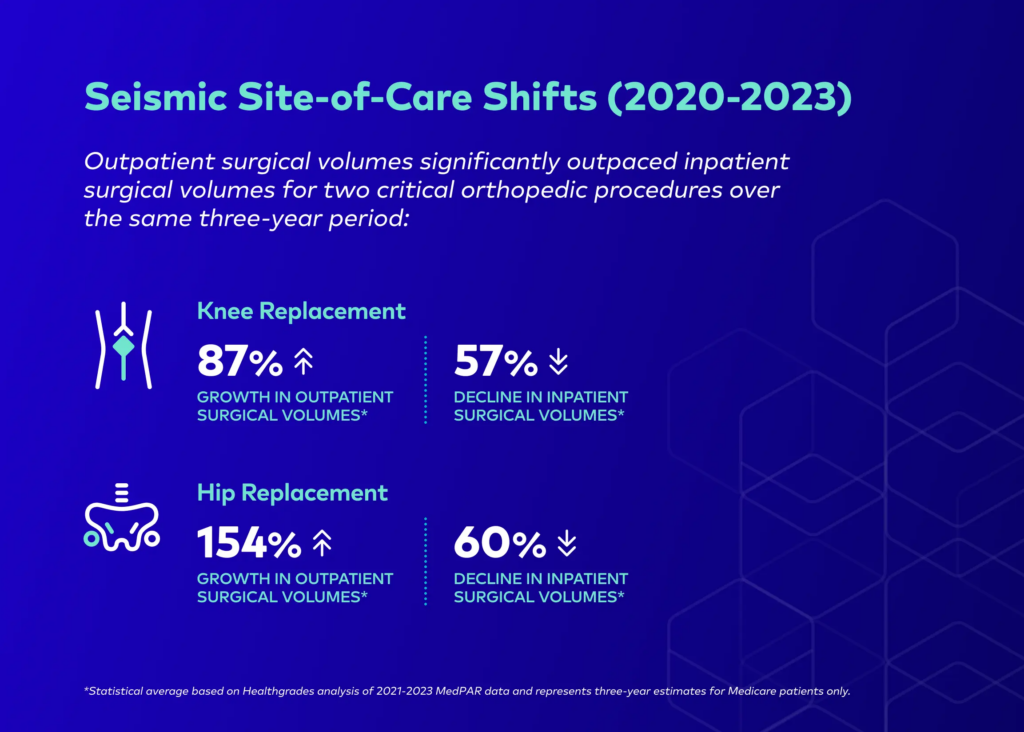
In addition to joint replacement, the Advisory Board identified three other sub-service lines where the growth in outpatient volumes exceeded inpatient volume losses: general surgery, urology, and orthopedics hand procedures. Inpatient volumes for these four procedures are unlikely to return, representing huge potential losses for hospitals that fail to diversify.
While outpatient migration does threaten inpatient revenue, site-of-care shifts also represent a $50 billion opportunity for industry stakeholders. Larger health systems have a considerable advantage in mitigating the financial impact of outpatient migration. However, there is still an opportunity for those unable to shoulder the burden of facility expansion alone. Shared referrals and volume trading through partnerships and affiliations are just two ways smaller healthcare providers can recapture inpatient revenue losses without compromising existing services.
In light of these ongoing challenges, Healthgrades commends the recipients of this year’s specialty care awards and state rankings for their efforts to meet the healthcare needs of their communities.
A Note on Healthgrades Methodology
Healthgrades awards and ratings are not a popularity contest: Healthgrades does not consider a hospital’s reputation or financial standing when evaluating performance, and hospitals cannot opt in or opt out of the assessment process. This approach allows hospitals and consumers to stay focused on what matters most: patient outcomes.
Healthgrades is working to expand its patent-pending outpatient methodology as outpatient volumes continue to surge in other service areas. This will ensure that patients have access to data-driven measures of hospital quality wherever they seek care.
To learn more about how Healthgrades rates hospitals, view the complete methodologies:
- 2025 Specialty State Rankings Methodology
- 2025 Specialty Excellence Awards Methodology
- 2025 Outpatients Awards Methodology
1To be eligible for State Rankings, there must be a substantive number of hospitals eligible in each state for the individual award area. To learn more about how Healthgrades determines the state leaders in specialty, see Healthgrades 2025 Specialty State Ranking Methodology.
2Consumer Insights Survey, Infosurv on behalf of Healthgrades, n=991, October 2022.
3Healthgrades Research, n=1202, December 2023.